

Virgin Trains Poised to End Eurostar's Channel Tunnel Monopoly
Virgin Trains secured UK regulatory approval to operate Channel Tunnel services. Starting October 2030, this move ends Eurostar's 30-year monopoly, bringing up to 20 daily return journeys between London, Paris, Brussels, and Amsterdam, fostering significant competition.
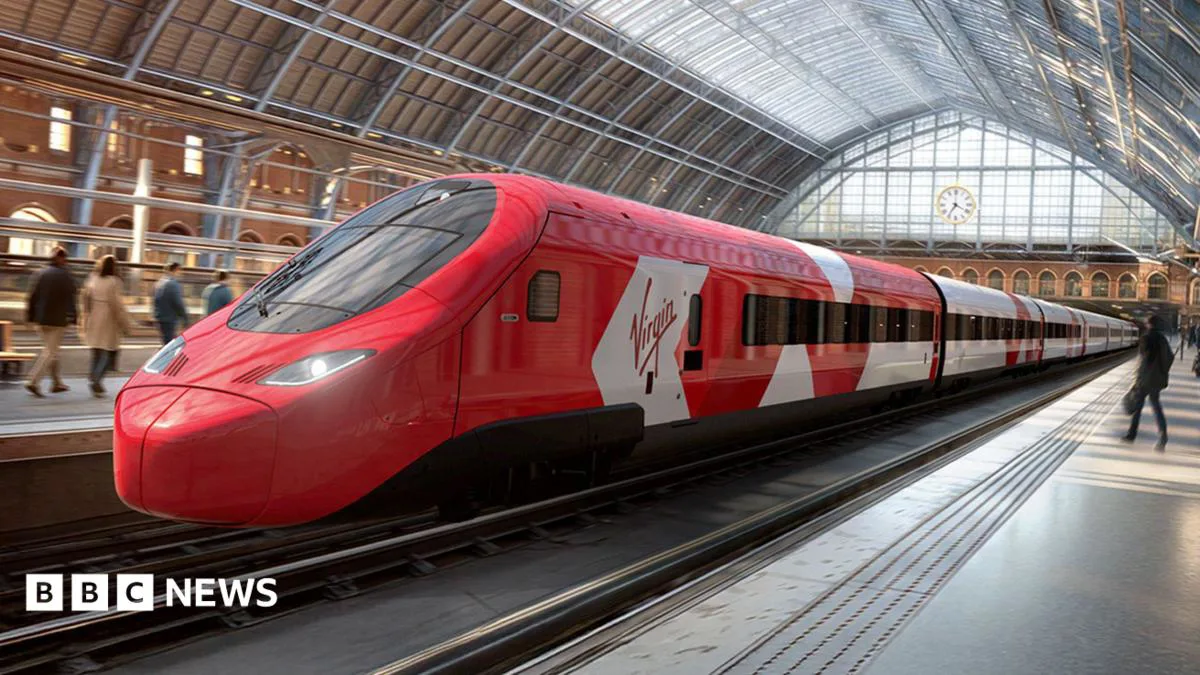
The UK's Office of Rail and Road (ORR), the independent rail regulator, has given its approval for Virgin Trains to operate passenger rail services through the Channel Tunnel to continental Europe, marking a significant shift in the market. This decision, announced on August 17, 2026, is set to break Eurostar's 30-year monopoly, which has been in place since 1994, and will pave the way for up to 20 daily return services between London and Paris, Brussels, and Amsterdam starting from October 2030. This development is widely seen as ushering in a new era of competition in the international rail travel market.
The ORR's approval encompasses a framework track access agreement between Virgin Trains and London St Pancras Highspeed, the operator of the High Speed 1 (HS1) line, valid from October 1, 2030, to December 31, 2040. Under this agreement, Virgin will initially launch with six daily London-Paris services, gradually increasing to 13 by October 2031. Additionally, the company is authorized to run four London-Brussels return trips from February 2031 and three London-Amsterdam return trips from September 2031. Sir Richard Branson's Virgin Group plans to invest £700 million in this cross-Channel project, anticipating the creation of approximately 400 new jobs in the UK.
This approval follows Virgin Trains' earlier regulatory success in October 2025, when it secured access to the Temple Mills maintenance depot in London, a facility currently used by Eurostar. The ORR, considering the limited capacity at Temple Mills, deemed Virgin's proposal to be more financially and operationally robust, rejecting applications from other rival firms. Eurostar had objected to Virgin's track access application, citing its own expansion plans, but the ORR dismissed these objections, stating that Eurostar's planned expansion represented only a 'modest increase in capacity' compared to Virgin's new series of routes.
This development holds significant potential to transform the rail transport market between Europe and the United Kingdom. With Eurostar's more than three-decade-long monopoly coming to an end, travelers are expected to benefit from increased choices and potentially more competitive fares. The Channel Tunnel, currently utilized at approximately 50% of its capacity, offers ample room for new operators to grow. Industry experts suggest that the heightened competition could also drive improvements in service quality and foster greater innovation.
However, Virgin Trains still needs to complete several crucial steps before its services can commence. The company must secure access to other rail networks in mainland Europe, obtain safety approvals from both UK and European Union authorities, and procure the necessary rolling stock. Reports indicate that Virgin is nearing a deal to acquire 12 Alstom Avelia Stream high-speed train sets from the French rail manufacturer. These ongoing developments suggest that the international rail travel market is poised to become more dynamic and competitive over the next decade.
💸 Ready to act on this news?
You need a brokerage account to invest. Compare 30+ trusted brokers in seconds — zero commission options available.
Comments (0)
No comments yet. Be the first to comment!