

UK Urged to Cut Solar Panel Loan Costs for Homes
A report urges the UK government to reduce the high cost of loans for residential solar panel installations. Proposed financing models, such as "solar bonds," could broaden access to clean energy and significantly lower household bills.
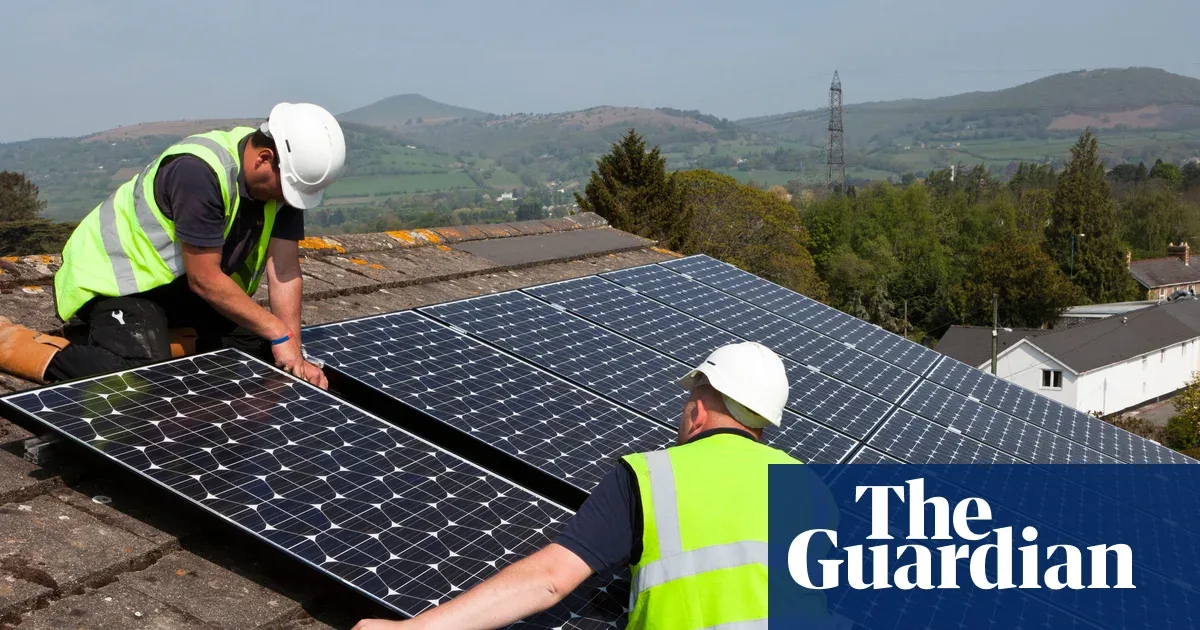
A significant call has been made to the UK government to reduce the cost of installing solar panels on homes. A report by the Common Wealth think tank proposes a new financing model, dubbed "solar bonds," to expand access to clean energy and lower household energy bills. This initiative aims to overcome the major hurdle of high upfront costs that currently impede the widespread adoption of solar power.
While solar panel installations offer the potential to save households hundreds of pounds annually on energy bills, the initial outlay typically ranges from £5,000 to £10,000, making it an inaccessible investment for many families. Existing commercial loans, while spreading repayments over time, often carry high interest rates of around 9% to 10%, which can negate most of the energy bill savings during the first decade. Donal Brown, lead author of the Common Wealth report, suggests that government-offered "solar bonds" or "solar gilts" could provide interest of 4% to 5%, thereby financing solar panel purchases and installations. Separately, a report by the New Economics Foundation and Finance Innovation Lab proposes that the Bank of England could provide cheaper loans (around 2% interest) to commercial banks, enabling them to offer low-interest or interest-free loans to households. Such a scheme is estimated to cut household energy bills by approximately £250 per year, even with loan repayments.
The UK's solar energy sector has experienced significant growth recently, with new installations in the first half of 2026 reaching a 15-year high. The government is also taking steps to support the transition to clean energy. Under the "Warm Homes Plan," announced in January 2026, up to £15 billion in public investment has been allocated for low and zero-interest loans for solar panels, batteries, and heat pumps. While the consumer loan scheme for England is set to launch in April 2027, regional support programs are already in place in Scotland and Wales. Additionally, the government has reduced VAT on electricity and removed "green levies" to ease energy bills. New regulations effective from August 2026 are also expected to facilitate the wider adoption of plug-in balcony solar panels.
These financing proposals are critically important within the context of the UK's escalating energy crisis and climate change objectives. Rising gas prices and anticipated increases in the energy price cap are intensifying the financial burden on households. The government's commitments to ensuring energy security and achieving net-zero emissions necessitate investment in renewable energy sources. Residential solar power can play a vital role in strengthening the nation's energy independence and shielding consumers from global energy market shocks.
Financial experts and analysts emphasize that the high upfront cost of solar panels is the primary barrier to their widespread adoption. Therefore, government-backed low-cost financing models could accelerate the transition of more households to clean energy technologies. The government's "Warm Homes Plan" aims to triple the number of homes with solar panels by 2030. Experts believe that the central government-backed loan schemes, scheduled to commence in April 2027, and similar financing mechanisms will be key to achieving these ambitious targets.
💸 Ready to act on this news?
You need a brokerage account to invest. Compare 30+ trusted brokers in seconds — zero commission options available.
Comments (0)
No comments yet. Be the first to comment!