

Trump Waives Beef Tariffs to Combat High Prices Amid Record Imports
U.S. President Donald Trump announced a 90-day waiver on additional tariffs for up to 300,000 metric tons of imported ground beef, aiming to lower record-high beef prices and tackle inflation. The move comes with a commitment that the imported beef will be sold 25% below current market prices.
U.S. President Donald Trump has taken a significant step to address soaring ground beef prices and persistent food inflation across the nation. On Friday, August 21, 2026, President Trump announced that the United States would allow up to 300,000 metric tons of beef product intended for ground beef to be imported without an out-of-quota tariff for 90 days. This decision is accompanied by a commitment that the imported beef will be sold at 25% below current market prices.
The initiative comes as American consumers grapple with historically high beef costs, with inflation cited as one of the most intractable problems they face. The tariff waiver temporarily suspends higher duties that are typically triggered once trade volume surpasses a certain quota under the World Trade Organization (WTO) system. According to the White House, this deal is expected to reduce prices for Americans while also providing space for the U.S. beef herd to grow again. Earlier in February 2026, the administration had already increased the low-tariff import quota for lean beef from Argentina by 80,000 metric tons.
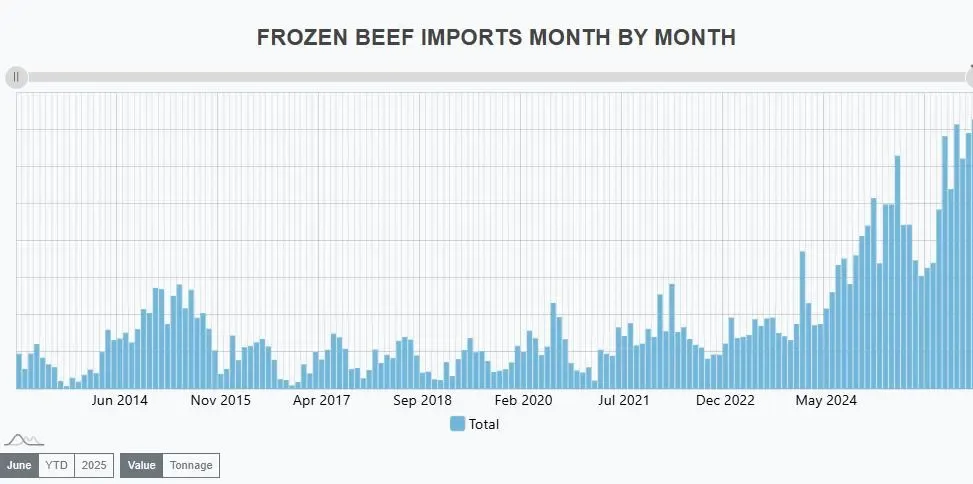
The President's announcement caused a downturn in futures markets and drew immediate criticism from the U.S. cattle industry. Industry groups argue that the measure will hurt domestic producers and undermine efforts to rebuild the national cattle herd. Data from the U.S. Department of Agriculture (USDA) indicates that the U.S. cattle inventory stood at 86.2 million head at the beginning of 2026, marking a historic low in modern history. Concurrently, U.S. beef imports have reached record values in 2026, with significant increases in the value of both fresh and frozen beef imports.
This development is set against the backdrop of broader inflationary pressures in the U.S. economy and rising food prices. Ground beef prices, for instance, rose 9% in July from a year ago and have surged 57% over the past five years. While consumer demand remains strong, factors such as drought conditions and elevated operating costs continue to constrain domestic cattle production. The Trump administration aims to alleviate the financial burden on consumers while simultaneously providing domestic producers with time to recover and rebuild their herds.
However, some analysts and industry experts express skepticism about the significant impact this temporary tariff relief will have on market prices. The 300,000 metric tons of imported beef represent a relatively small fraction of the total U.S. beef supply—approximately 3% of U.S. beef demand or 44 days of consumption—leading to questions about its ability to meaningfully lower prices. The cattle industry remains concerned that increasing imports offers a short-term fix rather than a long-term solution, potentially disincentivizing domestic producers from expanding their herds.
💸 Ready to act on this news?
You need a brokerage account to invest. Compare 30+ trusted brokers in seconds — zero commission options available.
Comments (0)
No comments yet. Be the first to comment!