

Trump Administration Refunds $100 Billion in 'Liberation Day' Tariffs to Businesses
The Trump administration has refunded approximately $100 billion to businesses from the 'Liberation Day' tariffs, which the US Supreme Court ruled illegal. This amount represents roughly 60% of the total tariff revenue collected under the policy, with billions still awaiting repayment.
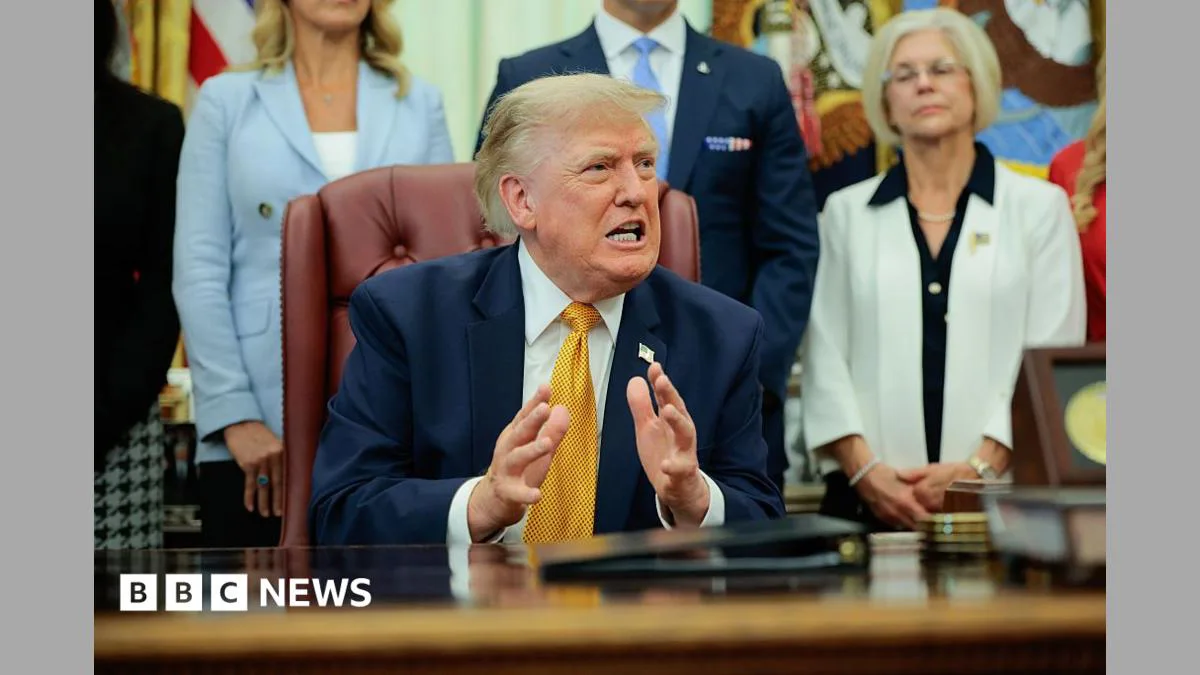
The Trump administration has begun refunding approximately $100 billion in duties to businesses, stemming from the so-called 'Liberation Day' tariffs that were ultimately deemed illegal by the U.S. Supreme Court. This significant development underscores the legal repercussions of former President Donald Trump's trade policies, with billions more in refunds anticipated as the process continues.
These tariffs were initially imposed by the Trump administration in 2025 on various imports under the International Emergency Economic Powers Act (IEEPA). However, in a landmark decision in February, the U.S. Supreme Court ruled that the president lacked the authority to unilaterally impose tariffs using this act, declaring the duties unlawful. Following this ruling, the U.S. Court of International Trade (CIT) ordered U.S. Customs and Border Protection (CBP) to process refunds to importers. To streamline the repayment process, CBP launched the Consolidated Administration and Processing of Entries (CAPE) system in April. To date, around $129 billion in potential and certified refund claims have been accepted, indicating that a larger portion of the total $165-$166 billion in unlawfully collected tariffs is expected to be returned.
While this development does not directly trigger immediate market price movements, it amplifies uncertainty regarding the future of U.S. trade policies. The tariff refunds have significantly impacted federal government customs duty revenue, leading to negative net receipts in May and June 2026. This situation highlights that tariffs, a cornerstone of Trump's economic agenda aimed at boosting domestic production and closing the budget deficit, have not fully achieved their intended goals. The federal budget deficit, after narrowing in 2025, has grown by 2% to $1.37 trillion in the first nine months of the fiscal year.
Despite the Supreme Court's decision, the Trump administration continues to prioritize tariffs in its trade policy. Last month, a new round of tariffs, ranging from 10% to 12.5%, was imposed on over 80 countries, including the UK, Mexico, Canada, Australia, India, China, and EU member states. These new levies are justified under Section 301 of the Trade Act of 1974, with the administration citing concerns over "forced labor" in supply chains. However, this new framework is also poised to face legal challenges.
A coalition of 25 U.S. states has already sued the administration, arguing that these new tariffs are merely a "pretext" to replace the previously invalidated duties and are themselves unlawful. Analysts and market experts express skepticism that these latest levies will withstand ongoing legal scrutiny, suggesting that trade policy uncertainty will persist. Consumers, who bore the brunt of higher prices due to the original tariffs, are unlikely to receive direct refunds, as the system is designed for direct importers. While lawmakers advocate for companies to pass on some of these refunded funds to consumers and small businesses, no mandatory mechanism currently exists. This scenario maintains a degree of uncertainty for both businesses and the broader economy in the coming period, with the impact of trade policies on U.S. economic growth and revenue remaining a key area of focus.
💸 Ready to act on this news?
You need a brokerage account to invest. Compare 30+ trusted brokers in seconds — zero commission options available.
Comments (0)
No comments yet. Be the first to comment!