

Tata Sons Chairman Chandrasekaran to Step Down Amid Board Divisions
N. Chandrasekaran, Chairman of Tata Sons, the holding company of Tata Group, announced he will not seek reappointment when his term concludes in February 2027, citing a lack of unanimous board support. This decision introduces leadership uncertainty during a critical period of strategic initiatives for the conglomerate.
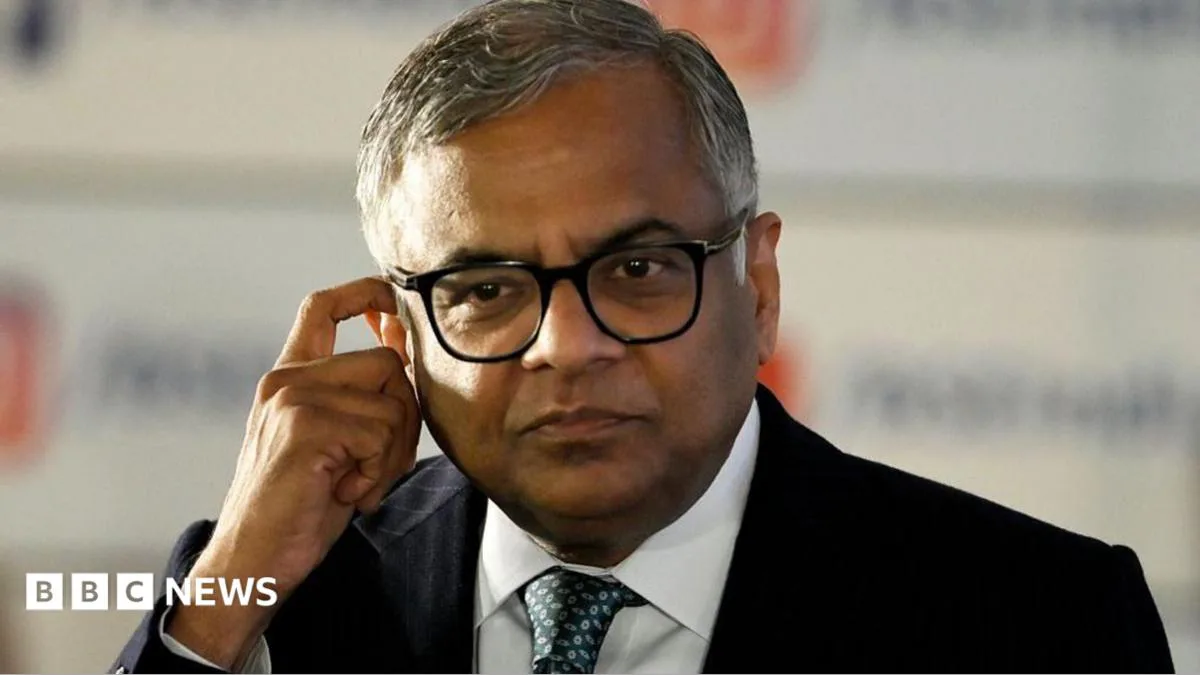
N. Chandrasekaran, Chairman of Tata Sons, the principal holding company of India's vast Tata Group, has declared his intention not to seek reappointment when his current term ends in February 2027. This unexpected move stems from a lack of unanimous board support for extending his tenure. Chandrasekaran's decision introduces a period of leadership transition uncertainty for the Tata Group, particularly as it navigates significant strategic projects.
Chandrasekaran's current term is set to expire on February 20, 2027. Both the Sir Dorabji Tata Trust and Sir Ratan Tata Trust, along with the Tata Sons Nomination and Remuneration Committee, had unanimously recommended a five-year extension of his term. However, during a Tata Sons board meeting in February 2026, the proposal failed to secure unanimous backing due to opposition from one board member. Chandrasekaran stated that with no resolution reached after six months, he decided not to pursue reappointment, emphasizing that the uncertainty could not continue indefinitely.
Chandrasekaran was appointed Executive Chairman of Tata Sons in January 2017 and was reappointed for a second five-year term in 2022. During his leadership, the Tata Group undertook major strategic initiatives, including the acquisition of Air India and significant expansion into new sectors such as semiconductors, electric vehicles, and digital businesses. Tata Sons serves as the holding company for over 30 Tata Group entities, including prominent names like Tata Consultancy Services (TCS), Tata Motors (owner of Jaguar Land Rover), and Air India.
Following this development, shares of Tata Group companies experienced selling pressure in the markets. Tata Consultancy Services (TCS) shares, for instance, saw declines of up to 6%, leading to a substantial loss in the group's market value. Market analysts are characterizing this as a 'governance event,' suggesting that while leadership transitions can create near-term sentiment risk, an orderly succession should preserve the long-term fundamental performance of the companies.
Disagreements between Tata Sons and Tata Trusts are not unprecedented, with the group famously experiencing a leadership dispute in 2016 that led to the ousting of then-chairman Cyrus Mistry. The current disagreements reportedly involve Noel Tata, Chairman of Tata Trusts, seeking assurances against a public listing of Tata Sons and raising concerns over the performance of some of the group's newer businesses.
Chandrasekaran will continue to serve as chairman until his term concludes in February 2027, providing a period for a smooth transition. A five-member committee will be responsible for selecting his successor. Chandrasekaran underscored the importance of leadership clarity for employees, investors, partners, and other stakeholders, especially with several strategic projects currently in critical stages of execution.
Related Symbols
💸 Ready to act on this news?
You need a brokerage account to invest. Compare 30+ trusted brokers in seconds — zero commission options available.
Comments (0)
No comments yet. Be the first to comment!