

Strait of Hormuz Deal Nears Final Stage: Global Energy Markets Watch Iran and Oman
Iran and Oman are nearing a deal for Strait of Hormuz maritime traffic. This critical development for global energy markets and regional tensions hinges on the U.S. lifting its blockade on Iranian ports.
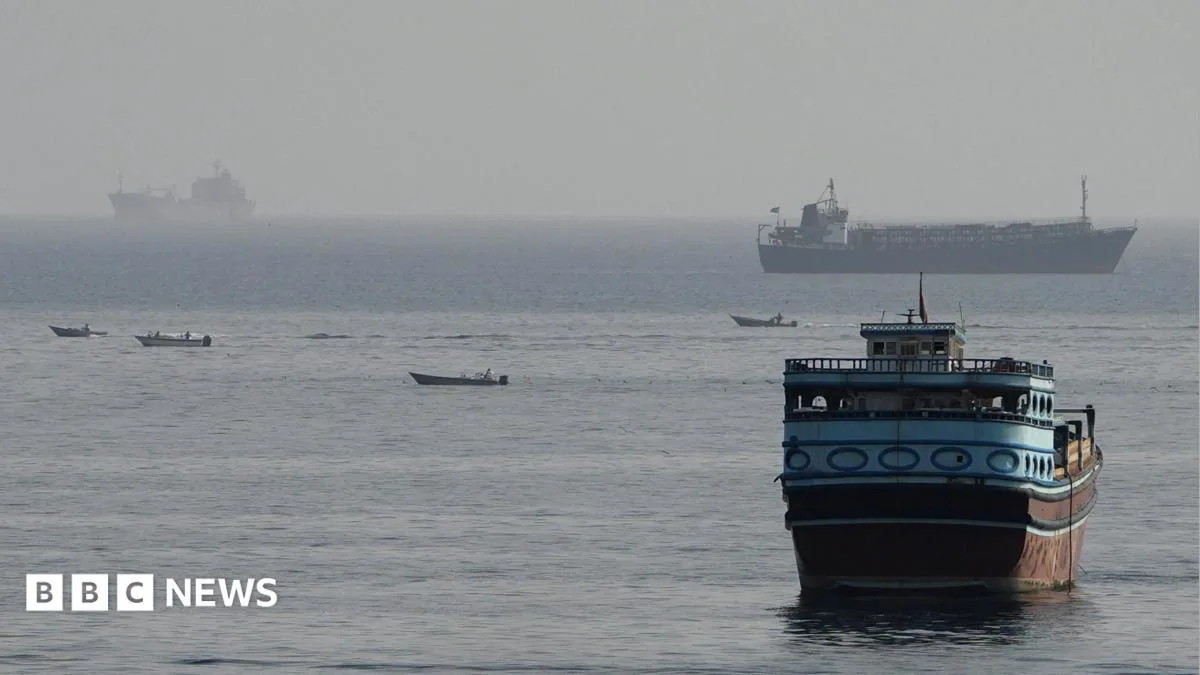
Iran and Oman are reportedly in the final stages of an agreement to regulate maritime traffic in the critical Strait of Hormuz. This development is seen as a significant turning point for global energy markets and geopolitical tensions in the Middle East. Iranian Foreign Ministry spokesperson Esmail Baghaei stated that Tehran and Muscat have agreed on the geographical coordinates for a shipping route and that a joint announcement is being finalized.
The emerging agreement suggests that ships would enter the Persian Gulf through an Iranian-controlled route and exit through an Omani-controlled route. However, some reports indicate that vessels might be required to coordinate with Iran even when exiting through Omani waters, and that the agreement could initially be temporary, possibly for 60 days. Iran may initially send its own ships to clear mines from the strait. The finalization of the deal is contingent on “no third parties interfering,” a clear reference to the United States. Tehran insists that the reopening of the strait depends on the U.S. lifting its naval blockade on Iranian ports and altering its overall conduct.
U.S. President Donald Trump has made statements suggesting progress in the talks, while also threatening military action if an agreement is not swiftly reached. Senior U.S. officials, including Secretary of State Marco Rubio and Treasury Secretary Scott Bessent, have acknowledged progress but stated that a final agreement has not been reached and that the U.S. remains committed to freedom of movement without Iranian control or tolls. Reports from Reuters and other sources suggest the proposed deal could grant Iran some control over ships entering the Gulf, which would mark a significant strategic victory for Tehran. The strait was an open international waterway before the U.S. and Israel attacked Iran on February 28.
The Strait of Hormuz is a vital chokepoint, through which 20% to 25% of the world's liquefied natural gas and seaborne oil trade passes annually. Its closure has led to global spikes in the prices of fuel, fertilizer, and other goods, unsettling economies worldwide. Recently, oil prices rose after Iran-aligned Houthi rebels targeted a Saudi oil tanker. U.S. West Texas Intermediate (WTI) futures gained 0.45% to $76.11 per barrel. An agreement to reopen the strait could alleviate these pressures on the global energy supply chain and potentially offer relief to the Trump administration, which faces mounting pressure over rising gas prices ahead of the U.S. midterm elections.
This potential agreement is viewed as a breakthrough in efforts to wind down the ongoing conflict in the Middle East. The U.S. is under pressure to end an unpopular war that has impacted its economy. Any deal formalizing Iranian control over the strait would represent a significant strategic victory for Tehran, which the U.S. might seek to block. The negotiations are also linked to the lifting of the U.S. blockade on Iranian ports and the potential resumption of talks on Iran's nuclear program. Oman has historically maintained cooperative relations with Iran and has served as a mediator in regional affairs.
Analysts caution that this deal is unlikely to resolve the broader disputes fueling the conflict. The current agreement is largely viewed as a temporary solution, with expectations that negotiations for a permanent arrangement, as well as nuclear talks, will continue during its duration. The U.S. stance remains that the strait should be an open international waterway ensuring freedom of movement and no imposition of tolls. Iran's Foreign Ministry has emphasized that an agreement with Oman alone would not ensure safe navigation, linking security conditions to U.S. actions.
💸 Ready to act on this news?
You need a brokerage account to invest. Compare 30+ trusted brokers in seconds — zero commission options available.
Comments (0)
No comments yet. Be the first to comment!