

Skydweller Solar Prototype Ditches After Record 8-Day Flight
Skydweller CEO Robert Miller said the prototype was lost in a controlled ditching after an 8-day flight; solar-drone development and testing continue unabated.
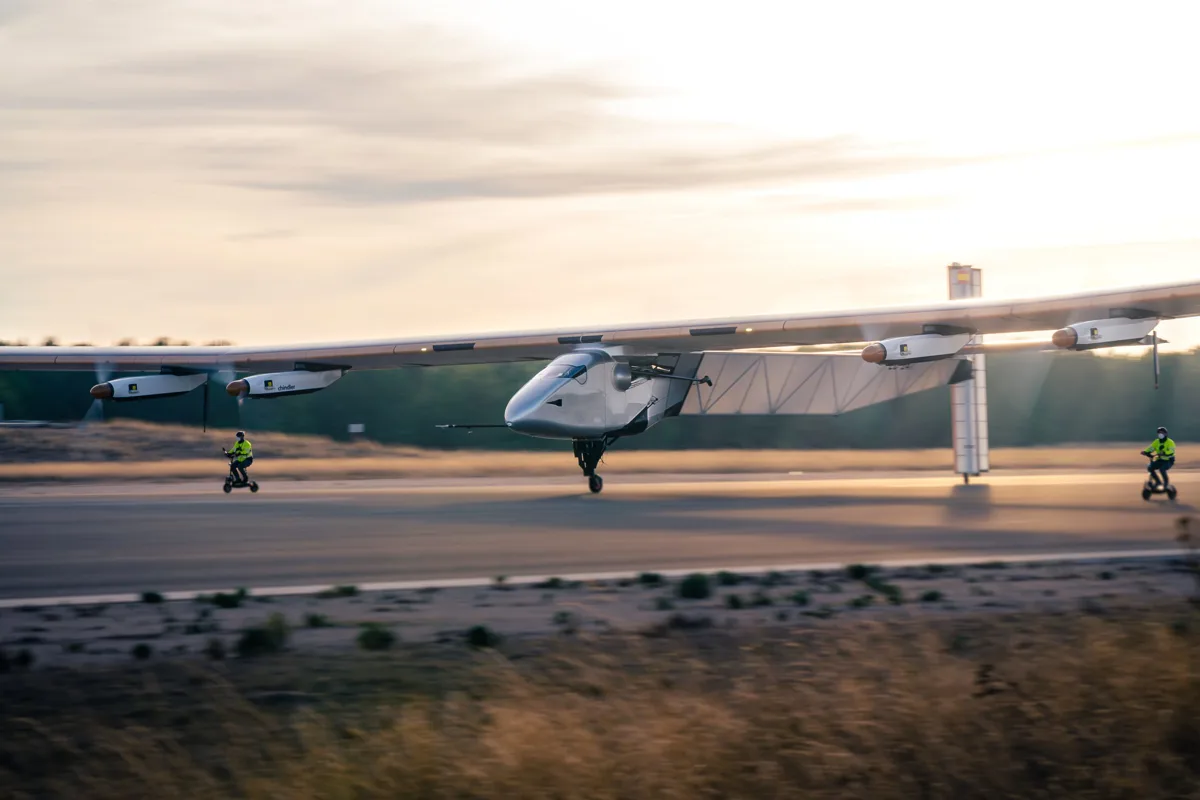
Skydweller Aero’s operational prototype ended its mission with a controlled water ditching on May 4 after launching from Stennis International Airport on April 26 and logging a record 8 days and 14 minutes (192 hours 14 minutes) of autonomous maritime patrol operations, the company said. The firm describes the sortie as a validation of persistent solar-powered flight for mission-relevant tasks.
According to Skydweller, the aircraft participated in the U.S. Navy’s FLEX 26 exercise and carried multi-intelligence payloads while on station; during the return transit it encountered unexpectedly severe weather with extreme vertical air mass variability that increased power demand and exhausted usable battery energy despite systems remaining nominal, triggering a controlled ditch northwest of Cancun. No personnel were onboard and no injuries were reported.
Independent reporting and industry outlets note that an investigation is under way, with references to preliminary inquiries by U.S. investigatory bodies and commentary from the Solar Impulse Foundation on the aircraft’s historical significance. The airframe in question is the former Solar Impulse 2, repurposed by Skydweller as a testbed for long-endurance uncrewed systems, which adds both technical pedigree and symbolic weight to the incident.
From a market and industrial perspective the event is closely watched by defense primes, avionics and battery suppliers, and companies targeting persistent intelligence, surveillance and reconnaissance (ISR) capabilities. While Skydweller is a private company and the incident does not produce a direct equity market reaction for a listed issuer, supply-chain players and defense contractors engaged in long-endurance UAS programs could face increased scrutiny on design margins, redundancy and operational risk—factors that influence contract terms, insurance and procurement timetables. Analysts emphasize that the technical milestone of 192 hours aloft materially strengthens the case for solar-endurance platforms despite the prototype loss.
Market commentators expect near-term impacts to center on program risk reassessments, additional testing requirements and potential contract schedule adjustments. Over the medium term, the operational proof-of-concept may accelerate investment interest in persistent aerial platforms for maritime and communications roles, provided follow-on airframes incorporate the lessons on battery capacity, energy management and weather-resilient operational concepts. Skydweller’s public messaging indicates lessons learned will be applied to next-generation designs and ongoing test campaigns.
💸 Ready to act on this news?
You need a brokerage account to invest. Compare 30+ trusted brokers in seconds — zero commission options available.
Comments (0)
No comments yet. Be the first to comment!