

Russia's War Toll Mounts in Ukraine Amid Economic Strain and Mobilization Talks
Russia faces escalating military casualties and deepening economic strain from its full-scale invasion of Ukraine. Amid rising budget deficits and labor shortages, discussions about a potential new wave of mobilization are intensifying pressure on the Kremlin.
Russia's full-scale invasion of Ukraine continues to impose a heavy toll on the Kremlin, both militarily and economically. According to a report by the Center for Strategic and International Studies (CSIS), Russian battlefield casualties reached 1.4 million, with 450,000 deaths between February 2022 and June 2026. The monthly casualty rate in 2026 alone averaged 30,000, and the ratio of Russian to Ukrainian military casualties has surged to roughly 8:1 in the first half of 2026. Despite these significant losses, Russian forces have made little operationally significant territorial progress this year.
The economic front reveals a deteriorating situation. Russia's federal budget deficit for the first seven months of 2026 reached 6.5 trillion rubles (approximately $78.7-$79 billion), already surpassing the full-year target of 3.8 trillion rubles (1.6% of GDP) by 1.7 times, as reported by Bloomberg. This widening deficit is primarily driven by rapidly increasing war financing. Government procurement spending, for instance, surged by 39% to 8.4 trillion rubles, exceeding 80% of the annual plan. Military expenditures have nearly tripled since 2021, reaching an estimated $186 billion in 2025, accounting for about 7.3% of GDP.
A decline in oil and gas revenues further exacerbates Russia's economic woes. Despite some increases in global oil prices due to Middle East tensions, Russia's oil and gas revenues fell by 17% in the first seven months of 2026. The country's trade surplus has significantly narrowed from $173 billion in 2021 to $68 billion in 2025, with a projected further drop to $53 billion in 2027. Russian Central Bank Governor Elvira Nabiullina and President Vladimir Putin have acknowledged the economic slowdown and looming labor shortages. Rising inflation and the Central Bank's efforts to contain it, through high interest rates, are also contributing to a deceleration in economic growth.
The economy is increasingly bifurcated between sectors tied to military production and those facing pressure. While Russia's GDP grew by 1.3% year-on-year in Q2 2026, marking its first return to growth since 2023, analysts suggest this growth largely masks a reliance on military spending. The Central Bank of Russia has revised its 2026 GDP growth forecast downward to between 0.0% and 1.0%. Ukrainian drone attacks on Russian oil refineries have led to increased fuel prices and rationing in some areas, contributing to renewed inflationary pressures. Moreover, the Central Bank's policy of preferential war lending is reportedly leading to an accumulation of bad loans in the banking sector, raising the risk of a potential crisis.
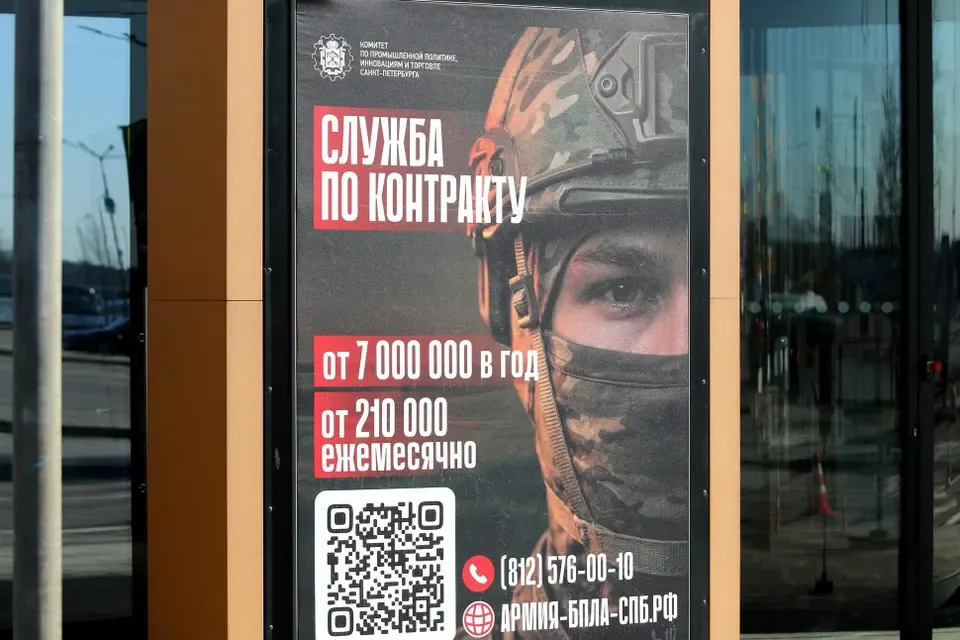
Against this backdrop, reports indicate that Russian officials are discussing a new wave of mobilization following the State Duma elections this autumn. However, experts caution that the timing and nature of such a move remain uncertain. The partial mobilization in September 2022, which called up 300,000 reservists, led to approximately one million Russians fleeing the country. A new large-scale mobilization could further exacerbate existing labor shortages and fuel public discontent.
Analysts warn that Russia is unlikely to win an economic war of attrition against Ukraine, which is backed by Western support. Alex Kolyandr of Eurasia Group and Andrei Klepach, chief economist at the Russian state bank VEB.RF, have highlighted Russia's mounting economic problems and the country's trajectory toward an inevitable social crisis. The prevailing outlook suggests a long-term decline for the Russian economy and a deterioration in the living standards of its populace.
Related Symbols
💸 Ready to act on this news?
You need a brokerage account to invest. Compare 30+ trusted brokers in seconds — zero commission options available.
Comments (0)
No comments yet. Be the first to comment!