

Panama Canal Restricts Ship Transits Amid El Niño Drought
The Panama Canal Authority will reduce daily ship passages starting in September due to drought caused by the El Niño phenomenon. This decision could lead to global trade delays and increased freight costs.
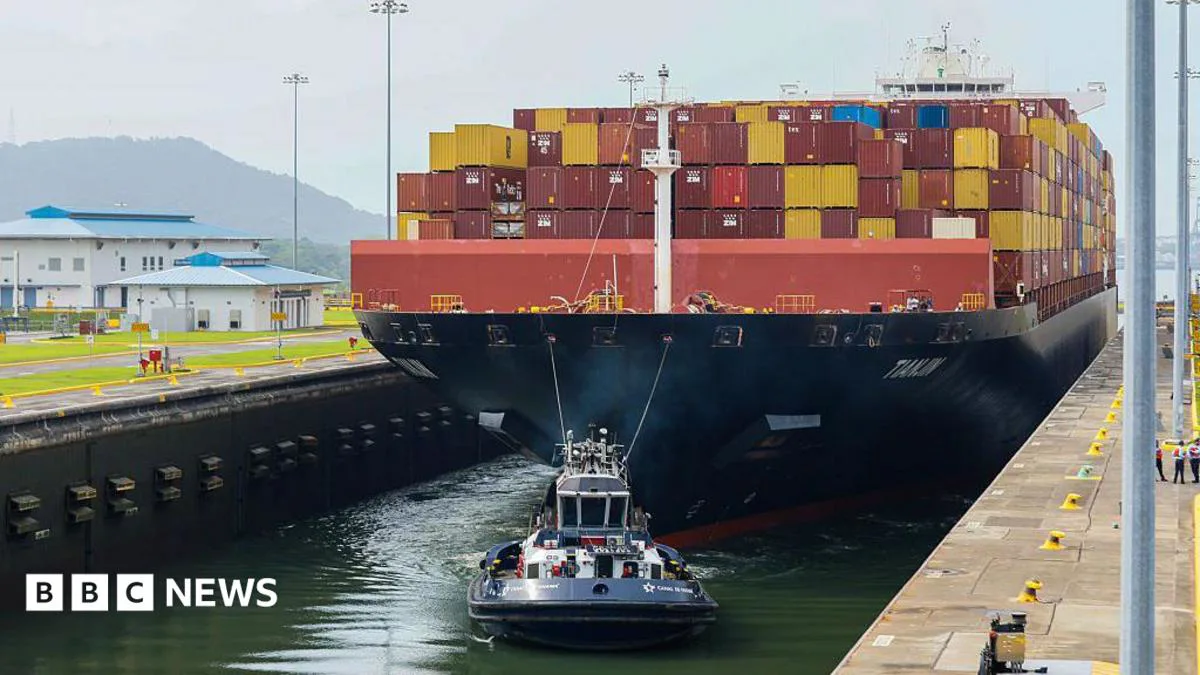
The Panama Canal Authority (ACP) has announced a phased reduction in daily ship transits starting in September, citing a severe drought exacerbated by the El Niño weather pattern and critically low water levels. The operator of the strategically vital waterway, which links the Atlantic and Pacific oceans, stated on Thursday that these measures are necessary to ensure the long-term sustainability of the canal's operations.
Under the new restrictions, the number of vessels allowed through the canal each day will decrease from 36 to 34 starting September 3. This figure will further drop to 32 daily transits from September 15. Water levels in the artificial lakes that feed the canal, particularly Gatun Lake, are significantly below historical averages. Rainfall from May to August was 34% below its historical average, while watershed inflows plummeted 44% below normal. Previous droughts, such as in 2023-2024, saw daily transit numbers cut from 38 to as low as 22. Furthermore, maximum draft limits for larger vessels have already been lowered as part of ongoing conservation efforts.
The Panama Canal handles approximately 5% of global maritime trade and about 40% of US container traffic. These transit restrictions are expected to exert significant pressure on global supply chains by increasing waiting times for ships. Non-booked vessels are already experiencing elevated waiting periods. The cost of securing transit slots through auctions has also surged to record highs, with some bids reaching up to $4 million for a single passage. This directly impacts freight costs, which could ultimately translate to higher prices for consumers.
The restrictions are poised to negatively affect trade routes, especially between Asia and the US East Coast, impacting the traffic of liquefied natural gas (LNG), liquefied petroleum gas (LPG), dry bulk, and container vessels. Shippers may be forced to reroute via the Suez Canal or around the Cape of Good Hope, adding 7 to 10 days to transit times and potentially leading to 20-30% increases in freight rates. This situation introduces an additional layer of risk for already fragile global supply chains.
El Niño is a natural climate pattern characterized by the warming of surface ocean temperatures in the Pacific, which alters wind and rainfall patterns worldwide. The current El Niño event is projected to be one of the strongest on record and could persist into 2027. Water supply in Panama is crucial not only for canal operations but also for half of the country's population of 4.2 million. Therefore, water management and restriction decisions play a critical role in the nation's overall well-being.
Analysts anticipate that these restrictions at the Panama Canal will create upward pressure on freight markets. Institutions like Clarksons Securities have indicated that the cuts will tighten vessel supply and push more ships onto longer routes. Expectations are for increased freight rates, particularly for Very Large Gas Carriers (VLGCs) and dry bulk vessels. The Panama Canal Authority has also stated that further restrictions could be implemented depending on rainfall levels, increasing uncertainty in the shipping and logistics sectors in the coming period.
💸 Ready to act on this news?
You need a brokerage account to invest. Compare 30+ trusted brokers in seconds — zero commission options available.
Comments (0)
No comments yet. Be the first to comment!