

Monetarism Debate: New Fed Era and Rising Criticisms of Policy
Forbes columnist John Tamny likens monetarism to Soviet Five-Year Plans, raising questions about Fed chair Kevin Warsh’s monetarist-leaning rhetoric and market implications.
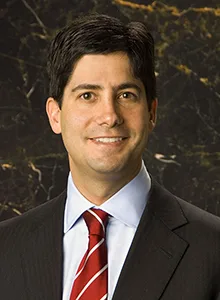
A Forbes column by John Tamny argues that contemporary monetarist prescriptions resemble centrally planned Five-Year economic schemes, asserting that attempts to "plan" money supply overlook the decentralized signals of production and exchange. Tamny contends that the idea of pre-setting money growth targets is both impractical and philosophically flawed.
Tamny's piece cites recent academic commentary and public intellectual debate—naming economists associated with institutions such as Civitas and Stanford—and links those arguments to the policy stance of Kevin Warsh, who was confirmed and sworn in as Federal Reserve chair in May 2026. The column highlights a quote that stresses the importance of acknowledging the “sheer volume of money sloshing through the economy” as part of the rationale for renewed monetarist emphasis.
Markets are already parsing what a monetarist-leaning Fed might mean for rates, the central bank’s balance sheet and risk pricing. Some institutional reports note that investors have priced a relatively steady fed funds path for 2026 even as leadership changes, but caution that shifts in balance-sheet policy or explicit money-growth guidance could prompt repricing in Treasuries, FX and equities. The immediate effect would likely be higher volatility in interest-rate sensitive assets as participants reassess term premia and inflation expectations.
From a policy-history perspective, monetarism—associated with Milton Friedman and the Chicago school—emphasizes control of monetary aggregates as a tool to stabilize prices; decades of debate have refined and contested its practical viability. Critics argue that aggregate-focused frameworks can miss distributional and micro-level signals that determine actual money demand and velocity, while proponents maintain that money growth remains a core macro anchor. Tamny’s comparison to Soviet planning underscores a normative critique: centralizing monetary rules risks ignoring complex market signals.
Forward-looking commentary from economists and strategists converges on a common theme: Fed leadership and communication will shape market outcomes as much as doctrinal shifts. If the Warsh Fed prioritizes balance-sheet normalization or tighter money-growth rhetoric, strategists expect a period of adjustment in yields and risk premiums; conversely, pragmatic, data-dependent implementation could mute disruptive effects. Investors and policymakers will monitor incoming inflation, employment and production metrics to assess whether monetarist prescriptions translate into measurable policy shifts.
💸 Ready to act on this news?
You need a brokerage account to invest. Compare 30+ trusted brokers in seconds — zero commission options available.
Comments (0)
No comments yet. Be the first to comment!