

Microsoft's AI Ambitions Hit Chip and Data Center Hurdles
A Guardian investigation reveals a discrepancy between Microsoft's stated AI capacity and operational advanced chip count. Data center delays and custom chip challenges reportedly hinder the tech giant's AI goals.
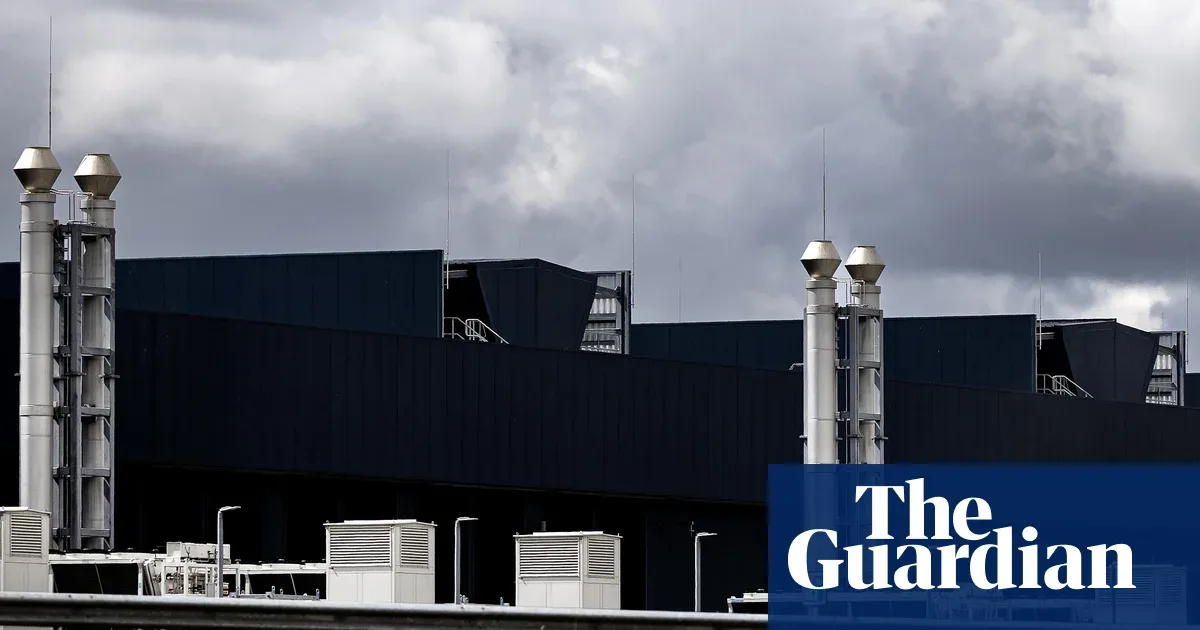
Microsoft's ambitious artificial intelligence (AI) plans are reportedly facing significant hurdles in chip supply and data center infrastructure, according to a new investigation by The Guardian. The research highlights a notable discrepancy between the tech giant's stated AI capacity and the actual number of advanced AI chips in operational use. This situation points to operational challenges that could slow the company's AI advancements.
The report indicates that Microsoft (MSFT) aimed to have 1.8 million AI chips installed in its global data centers by the end of 2024. However, by mid-2026, this number reached 2.2 million, which is less than half of what some experts had anticipated. The core issue is not a lack of advanced AI chips in inventory, but rather delays in the construction of data centers where these chips are meant to operate. For instance, major data center investments like the Fairwater project in the U.S. are reportedly not yet fully operational, despite earlier statements from Microsoft CEO Satya Nadella. Microsoft has also indicated that its AI chip deployment challenges stem more from power availability and the speed of data center construction than from chip supply itself.
This development could potentially impact Microsoft's (MSFT) competitive position in the AI market. The company's struggle to meet surging demand for its Azure AI services is reflected in a significant increase in commercial remaining performance obligations (RPO), suggesting that Microsoft has pre-sold AI capacity it cannot yet deliver. Furthermore, with AI data centers projected to consume approximately 70% of all memory chips by 2026, this intense demand is creating pricing pressure and supply constraints across other sectors. These factors collectively contribute to a broader tension in the semiconductor market and drive up the cost of AI infrastructure investments.
In a broader economic context, the global AI arms race necessitates massive data center build-outs powered by expensive chips, predominantly from Nvidia (NVDA). The secrecy surrounding Nvidia's supply chain and the reluctance of major tech companies to disclose their chip holdings make it challenging to accurately assess the true scale and progress of the AI industry. Microsoft's efforts to develop its own Maia series chips (Maia 200, Maia 300) are part of a strategy to reduce its reliance on Nvidia. However, production delays for these chips and expectations of underperformance compared to Nvidia's Blackwell chips complicate Microsoft's strategy. While negotiations with Taiwan Semiconductor Manufacturing Company (TSMC) for over 300,000 Maia 300 chips for 2027 delivery are underway, this situation underscores Microsoft's challenge in scaling its own chip capabilities in a rapidly evolving AI technology landscape.
Analysts, such as Bernstein, maintain an “Outperform” rating on Microsoft, citing the company's disciplined approach to AI infrastructure spending and flexible data centers that support long-term growth, raising its target price to $660. However, factors such as the departure of senior AI infrastructure leaders could strain capacity expansion efforts. Overall, the market remains focused on how quickly and efficiently Microsoft can scale its physical infrastructure to meet the escalating demand for AI.
Related Symbols
💸 Ready to act on this news?
You need a brokerage account to invest. Compare 30+ trusted brokers in seconds — zero commission options available.
Comments (0)
No comments yet. Be the first to comment!