

Kganyago Wary of CPI, Guarded on South Africa Rate Outlook Amid Iran War
SARB Governor Lesetja Kganyago said policymakers will "monitor incoming data very carefully" as the Iran war clouds the inflation outlook and raises global uncertainty.
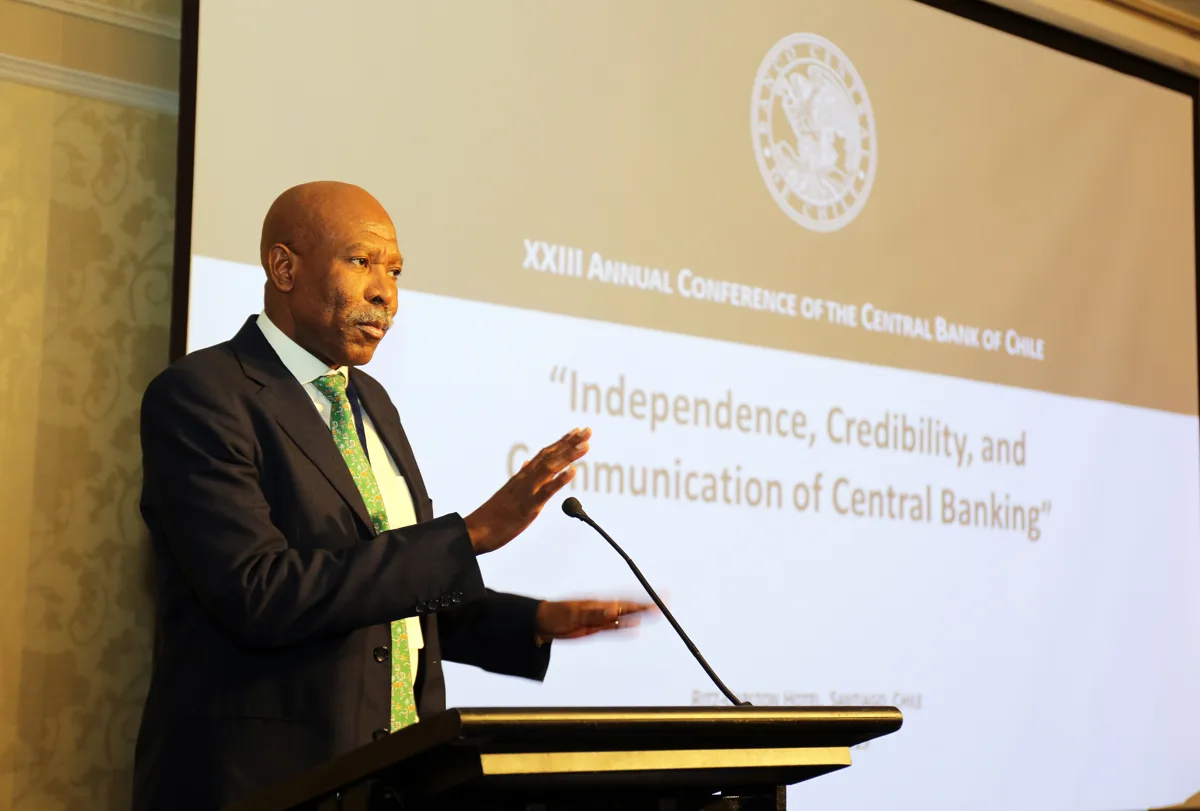
South African Reserve Bank (SARB) Governor Lesetja Kganyago said policymakers will "monitor incoming data very carefully" to guide their next rate decision, warning that the U.S.-Israel conflict with Iran has injected fresh uncertainty into the inflation outlook. The comments followed the Monetary Policy Committee's decision in March to hold the policy rate at 6.75%, underscoring a cautious, data-driven approach.
Kganyago explained that risks to consumer price inflation are two-sided: an energy-driven shock could push prices up in the near term while weak global demand could restrain inflationary pressures. The central bank said it is redrafting adverse and baseline scenarios stated earlier in the year because the assumptions underpinning those scenarios — particularly oil-price paths and exchange-rate projections — have materially changed since the outbreak of the conflict. He highlighted exchange-rate volatility as a transmission channel that could amplify imported inflation.
Markets reacted with renewed rand weakness and a modest pick-up in short-dated government yields, while traders pared back expectations for imminent rate cuts. The March policy hold, together with SARB's warnings about energy-price risks, prompted some investors to reprice the timing of potential monetary easing. Nonetheless, headline inflation near target has thus far limited aggressive repricing toward tighter policy.
The backdrop is global: the Iran conflict has pushed oil and related commodity prices higher, creating a supply-side shock that central banks globally are factoring into their inflation assessments. For emerging markets like South Africa, such external shocks complicate the path back to stable, low inflation by transmitting through fuel, transport and agricultural input costs. SARB's move to revise its risk scenarios reflects the uncertainty over the persistence and pass-through of these shocks.
Analysts say SARB will remain data-dependent and cautious; if oil price pressures prove transitory and the rand stabilises, the bank could resume easing later in the year, but a prolonged conflict would likely keep policy on hold or prompt tightening. Market attention will center on upcoming CPI prints, oil-price developments and USDZAR dynamics as key inputs to the Bank's next policy call.

💸 Ready to act on this news?
You need a brokerage account to invest. Compare 30+ trusted brokers in seconds — zero commission options available.
Comments (0)
No comments yet. Be the first to comment!