

Gold's Substantial Decline: What Signal Does It Send to Markets?
Gold prices have seen a significant decline, falling over 25% from their January 2026 peak. This downturn is attributed to a strengthening U.S. dollar and expectations of hawkish Federal Reserve monetary policy. Analysts suggest gold's movements reflect currency strength rather than its own intrinsic value.
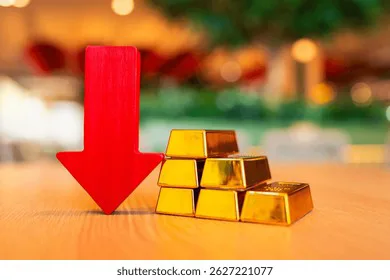
Gold prices have experienced a notable decline since reaching record highs in January 2026, drawing significant attention in financial markets. The precious metal, which touched levels around $5,600 per ounce in January, has retreated to approximately $4,038 per ounce by mid-July, marking a loss of over 25% from its peak. This downturn signals a potential decrease in investor appetite for safe-haven assets and reflects dynamic shifts in global financial markets.
Several key factors underpin gold's recent depreciation. According to Forbes, the decline in gold's value reflects a strengthening U.S. dollar. Markets unwinding worst-case scenarios regarding potential conflict with Iran that did not materialize, coupled with Treasury Secretary Bessent's reaffirmation of a "strong dollar policy," have been primary drivers bolstering the dollar. Furthermore, as a non-yielding asset, gold's opportunity cost increases with rising interest rates and expectations of a hawkish monetary policy from the Federal Reserve (Fed). Elevated U.S. inflation fueled expectations of Fed rate hikes, pushing real yields higher and making gold less attractive.
Goldman Sachs also lowered its year-end gold price target, citing expectations that the Fed would not cut interest rates in 2026. A partial de-escalation in geopolitical tensions also contributed to a reduced risk premium, further diminishing gold's appeal. However, some analysts note that renewed developments in the U.S.-Iran conflict could again drive up oil prices and inflation, potentially leading the Fed to maintain its tightening policies.
The volatility in gold prices should be assessed within a broader economic and political context. It is emphasized that gold, contrary to popular belief, is not merely a hedge against inflation but also reflects the strength of currencies and confidence in the financial system. Structural factors such as the increasing U.S. national debt, years of negative real interest rates, and the tendency of central banks to diversify reserves away from the dollar continue to be fundamental elements influencing gold's long-term trajectory.
Market expectations and analyst forecasts vary following this decline. J.P. Morgan Global Research projects gold to average $6,000 per ounce by the end of 2026 and potentially reach $6,300 by 2027, though it acknowledges a recent decline in investor interest and ongoing geopolitical and Fed policy uncertainties. BofA, however, warns that technical indicators suggest the decline could continue, with prices potentially retreating to the $3,315-$3,702 range. The World Gold Council (WGC) suggests gold might remain relatively range-bound in the short term, but catalysts such as a worsening economy or expectations of interest rate cuts could push prices back above $4,500. In the long run, gold continues to hold importance as a stabilizer against dollar debasement and a means of preserving purchasing power.
💱 Trade this forex / commodity move
You need a brokerage account to trade forex and commodities. Compare 30+ trusted brokers in seconds.
Comments (0)
No comments yet. Be the first to comment!