

Fed's Paulson Content with Current Rates, Keeps Open Mind on Policy Path
Philadelphia Fed President Anna Paulson expressed contentment with current interest rates, backing last week's Fed decision. She remains open to more restrictive policy if inflation progress towards the 2% target proves insufficient.
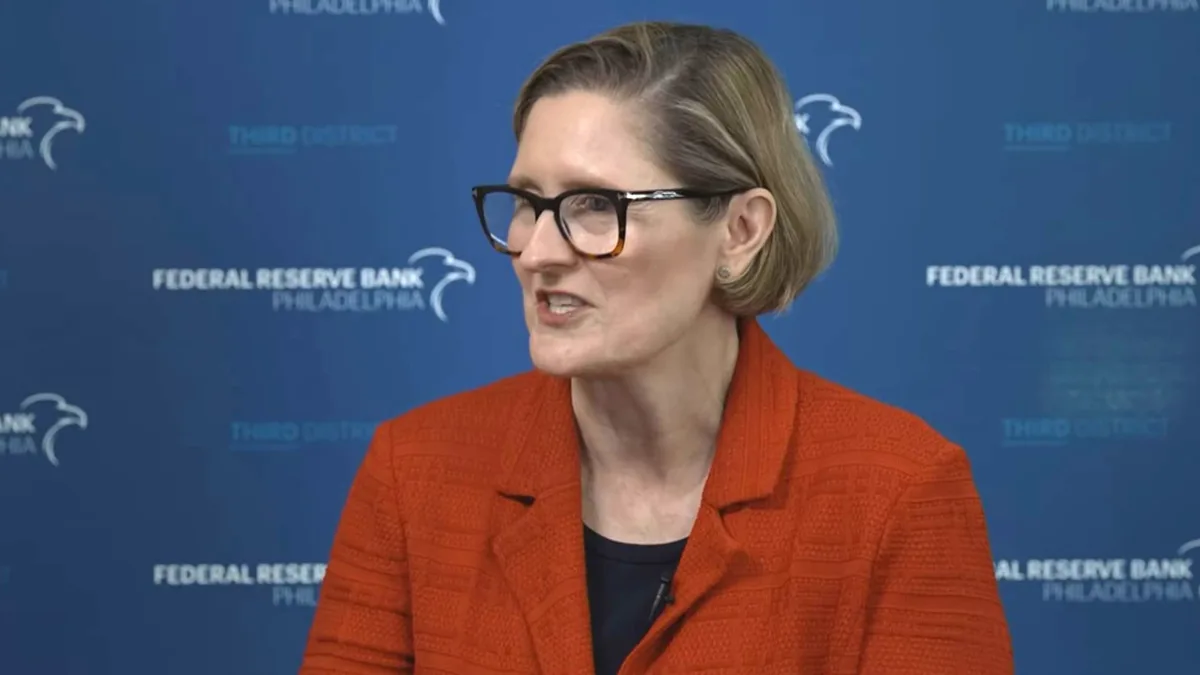
Philadelphia Federal Reserve Bank President Anna Paulson stated on Tuesday, August 4, 2026, that she supports the U.S. central bank's (Fed) recent interest rate decision and believes current rates are sufficient to guide inflation toward its target. Paulson noted that she voted with the majority in the Federal Open Market Committee (FOMC) meeting last week to keep interest rates unchanged. However, she emphasized her commitment to keeping an "open mind" regarding the future trajectory of monetary policy. These remarks, Paulson's first public comments since the July 29 FOMC meeting, were made during a CNBC interview and in an essay she published.
The Fed decided on July 29, 2026, to maintain the federal funds target range at 3.50% to 3.75%. This decision aligns with the Fed's dual mandate of price stability and maximum employment. Paulson indicated that the decision was not a difficult one for her, as current evidence suggests monetary policy is in a mildly restrictive stance on the economy. While there is evidence that underlying inflation has "edged down modestly" over the past year, Paulson also noted this could suggest that rates are "not restrictive enough."
Paulson highlighted her focus on underlying inflation trends, which she estimates to be between 2.4% and 2.8%. The Fed's preferred inflation gauge, the Personal Consumption Expenditures (PCE) price index, registered 3.3% on a core basis in June 2026, a decrease from 3.4% in May but still considerably above the Fed's 2% target. She described the recent improvement in some inflation data as "welcome" but "only one step," stressing that the key question is whether the federal funds rate is appropriately calibrated to return inflation to the 2% target within an acceptable timeframe.
This development maintains a degree of uncertainty in markets regarding the Fed's future actions. Investors are closely monitoring the resolve of Fed officials in combating inflation and how they will respond to incoming economic data. While current interest rate levels may provide some short-term market stability, Paulson's statements suggest that a more hawkish stance could be adopted if sufficient progress towards the inflation target is not achieved. The ongoing conflict in the Middle East, leading to uncertainty and higher energy prices, also contributes to inflationary pressures within the broader global economic context.
Paulson outlined that a scenario where underlying inflation remains stubbornly elevated without further progress would necessitate a more restrictive policy. In such a case, the passage of time without improvement would signal the need for tighter monetary policy. She noted that the labor market appears stable, but inflation remains "too high," adding that advancements in artificial intelligence infrastructure are creating price pressures in some areas while also driving growth. Analysts anticipate that the Fed's data-dependent approach will continue, with future inflation and employment figures playing a critical role in determining the central bank's subsequent policy adjustments.
💸 Ready to act on this news?
You need a brokerage account to invest. Compare 30+ trusted brokers in seconds — zero commission options available.
Comments (0)
No comments yet. Be the first to comment!