

England's Onshore Windfarm Applications Reach 10-Year High
Onshore windfarm applications in England have surged to their highest annual level in a decade, following the Labour government's decision to lift a de facto ban. Approximately 45 project proposals were submitted in the year to March, signaling a significant revival in the renewable energy sector.
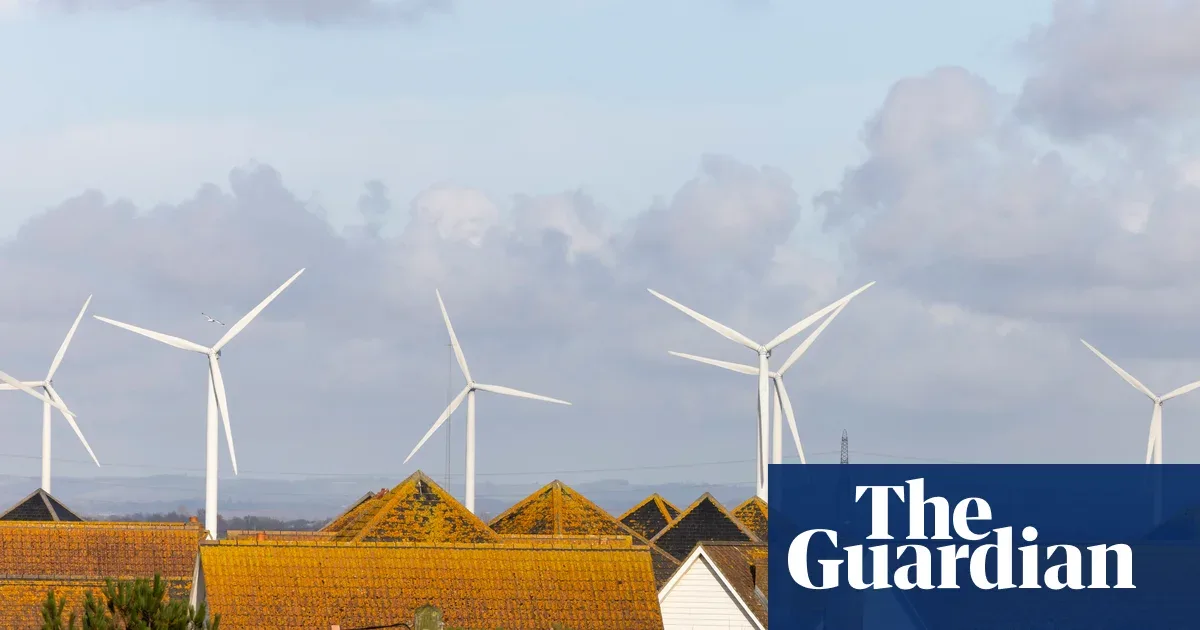
Applications for onshore windfarm projects in England have reached their highest annual level in a decade, with roughly 45 project proposals submitted in the year leading up to March. This notable increase is directly attributed to the Labour government's decision to overturn a de facto ban that had been in place since 2015. Renewable energy developers view this as a crucial step towards strengthening the country's energy independence and achieving its climate targets.
The de facto ban, imposed by the previous Conservative government in 2015, effectively blocked new onshore wind projects by requiring them to be in allocated areas and have full community backing, making approvals extremely difficult. Following the Labour Party's election victory in July 2024, the restrictive clauses within the National Planning Policy Framework (NPPF) were swiftly removed. Prior to the ban's lifting, onshore wind capacity applications in England averaged around 9 megawatts (MW) per month. This rate surged to approximately 36 MW per month by the beginning of this year, with the total capacity entering the planning system more than tripling.
Onshore wind is recognized as one of the UK's cheapest sources of new electricity, generating power at roughly half the cost of new gas-fired generation. This makes it critical for enhancing energy security and reducing exposure to volatile global gas prices. The renewable energy sector is poised to make significant contributions to economic growth and employment, with the potential to create up to 45,000 new jobs in the onshore wind sector by 2030. Furthermore, investments in wind power delivered a net financial benefit of £104.3 billion to UK consumers between 2010 and 2023, by lowering electricity and natural gas prices, even after accounting for subsidies.
This strategic move by the government aligns with the UK's commitment to achieving net-zero emissions by 2050 and doubling onshore wind energy capacity to 35 gigawatts (GW) by 2030. However, the pace of onshore wind development in England still lags behind Scotland and Wales. In the same period (year to March), applications for projects in Wales totaled 490 MW and in Scotland 5,280 MW, compared to England's 438 MW. Additionally, the average size of projects in England (8 MW) tends to be smaller than those in Scotland (59 MW).
Market analysts and energy sector representatives have welcomed the return of developers to the English market following the lifting of the ban. Tara Singh, CEO of RenewableUK, emphasized onshore wind's potential to bolster the country's energy security and reduce consumer bills. Moving forward, it is anticipated that large onshore wind proposals may be integrated into the Nationally Significant Infrastructure Project (NSIP) regime to further streamline planning processes, thereby paving the way for increased renewable energy investments.
💸 Ready to act on this news?
You need a brokerage account to invest. Compare 30+ trusted brokers in seconds — zero commission options available.
Comments (0)
No comments yet. Be the first to comment!