

Crypto Investors Shift Focus from Market Cap to Fundamentals
Crypto investors are increasingly valuing tokens based on fundamentals like revenue, usage, and value capture, moving past market-cap rankings. Industry executives describe this as the end of the "CoinMarketCap leaderboard" era.
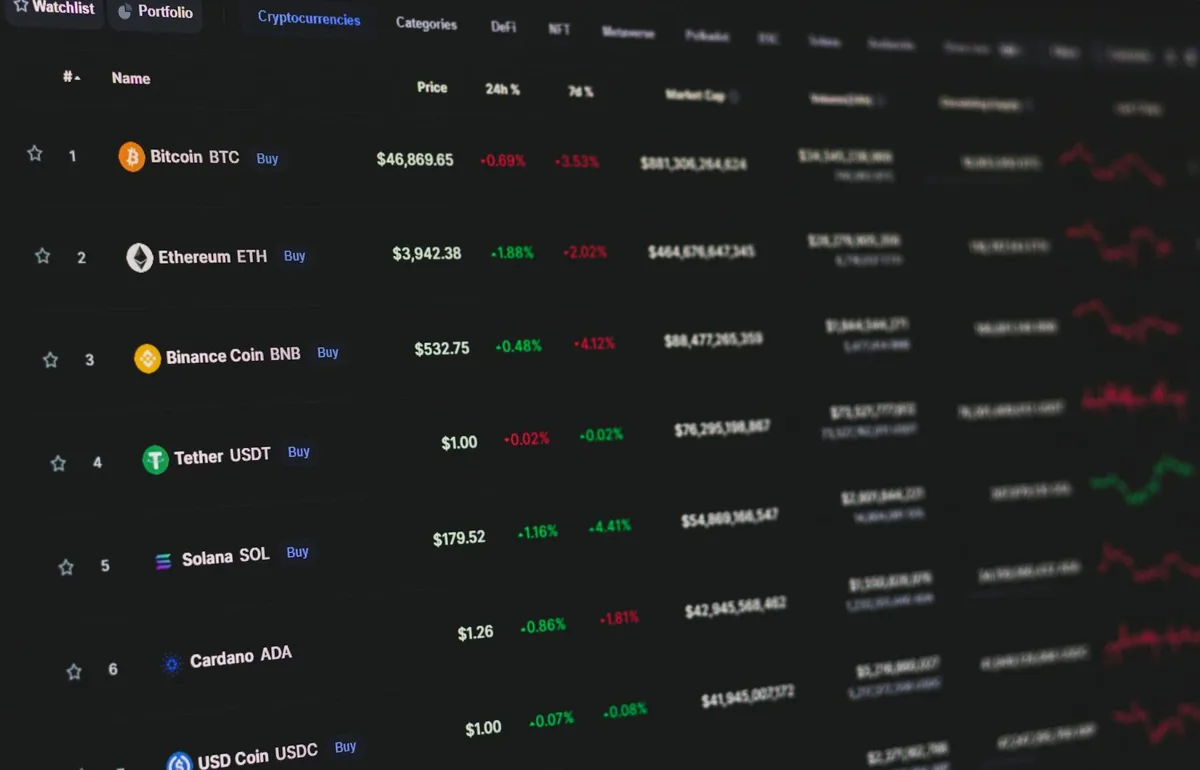
Crypto investors are significantly changing their token valuation methods in the cryptocurrency markets. Speculative approaches based on market capitalization rankings are being replaced by fundamental analysis indicators such as projects' real-world utility, generated revenues, and captured economic value. Leading industry figures characterize this shift as the end of the “CoinMarketCap leaderboard” era, signaling a transition to a more mature investment strategy.
Bitwise CEO Hunter Horsley emphasized this change, stating that in previous cycles, investors often valued new Layer-1 networks as a fraction of larger blockchains, with smaller projects being discounted accordingly. However, today's investors are focusing on addressable markets, adoption rates, and how much economic value a project can capture. For instance, when evaluating the HYPE token of a derivatives platform like Hyperliquid, investors are examining the platform's trading activity and economics, rather than simply treating it as a smaller version of another blockchain.
Wintermute OTC trader Jasper De Maere also noted that fundamental analysis and trading flows hold importance over different time horizons. While short-term prices are often driven by perpetual futures, fundamentals establish the “floor and the shortlist” for a token's long-term survival. Over the past 12 to 18 months, attention has shifted from infrastructure projects to applications and appchains that align more closely with traditional fintech and venture capital frameworks. Fundamental analysis is gaining increasing weight in areas such as decentralized finance (DeFi), perpetual futures exchanges, and decentralized physical infrastructure networks.
The market impacts of this transformation are also evident. In the first half of 2026, crypto tokens fell by 36%, while shares of publicly traded crypto-related companies rose by 23%. This divergence suggests that investors are distinguishing between listed crypto businesses, which have audited revenues and cash flows, and tokens that largely trade on speculative flows. Institutional investors' share in spot over-the-counter (OTC) trading volumes also increased from 59% in the first half of 2025 to approximately 72% in the first half of 2026. These flows are concentrated in major cryptocurrencies and revenue-generating tokens, with tokenized real-world assets (RWA) emerging as a key new category.
In a broader economic context, this shift is seen as a reflection of the crypto space's maturation and the demand for more rigorous standards from institutional players. The argument that market cap rankings can be misleading has long been made, and this new approach indicates the rise of cash flow-focused evaluations. This development signifies the emergence of a more structured and informed philosophy in crypto market analysis.
Analysts and market expectations foresee the continuation of this fundamental analysis-driven approach in the coming period. Major players like Grayscale anticipate that stablecoins, tokenized assets, and decentralized finance will drive demand for digital assets beyond Bitcoin. This indicates an era where investors will increasingly scrutinize projects for their long-term sustainability and real-world utility. Verifiable on-chain metrics and detailed project-level analyses will play a decisive role in investment decisions.
Related Symbols
₿ Want to ride this crypto move?
Open an account in minutes. Compare brokers offering crypto and start investing today — zero commission options available.
Comments (0)
No comments yet. Be the first to comment!