

China's Economic Slowdown Extends as July Data Misses Forecasts
China's economy showed further signs of an extended slowdown in July, with industrial output and retail sales falling below expectations. This intensifies pressure on Beijing to implement more measures to support economic activity.
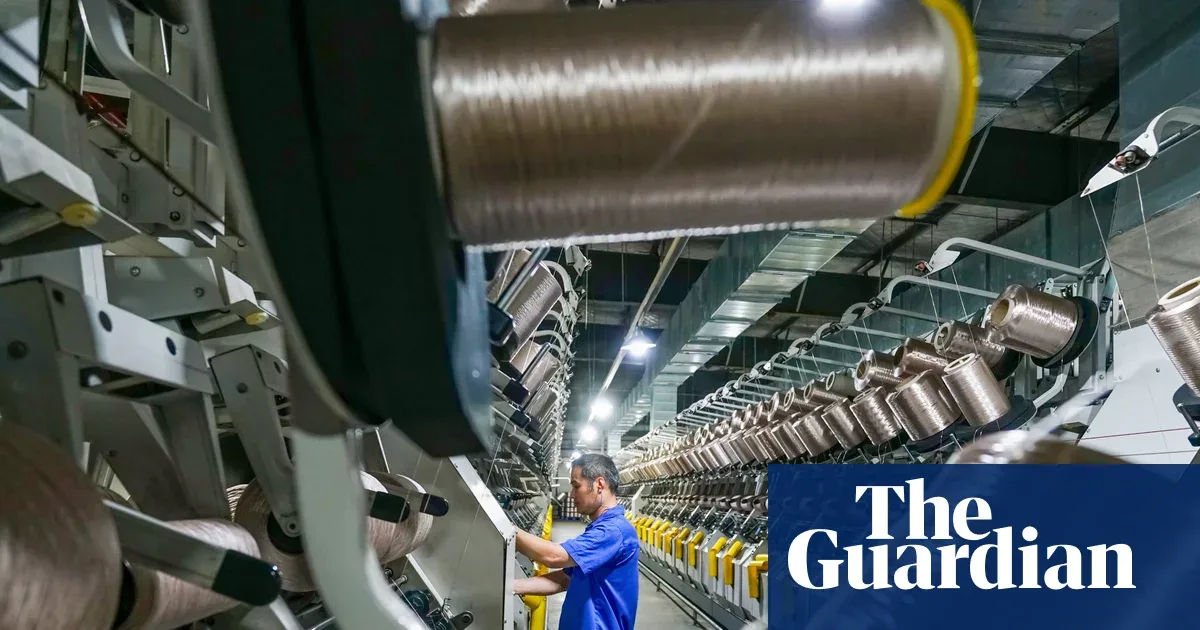
China's economy marked a weak start to the second half of 2026, with July data indicating a deepening economic slowdown. Industrial output grew by 4.5% year-on-year, a deceleration from June's 5.3% and missing Reuters' poll forecast of 4.8%, according to figures released by the National Bureau of Statistics (NBS). Retail sales, a key gauge of consumption, rose by a mere 0.6%, significantly below the 1.5% market expectation and slowing from a 1% increase in June.
These July figures follow a disappointing second-quarter Gross Domestic Product (GDP) growth of 4.3% year-on-year, which was a notable slowdown from 5.0% in the first quarter and one of the weakest quarterly readings since late 2022. On a quarter-on-quarter basis, GDP expanded by 0.9% in Q2, easing from 1.3% in Q1. The underlying cause of this subdued performance appears to be persistently weak domestic demand, exacerbated by an ongoing slump in the property sector and a reluctance among consumers to spend.
Fixed-asset investment, another critical component of economic health, also presented a concerning picture. It contracted by 6.7% in the first seven months of 2026, deepening from a 5.7% decline in the first half of the year. Property investment, in particular, plummeted by 19.2%. The urban unemployment rate edged up to 5.2% in July from 5% in June, with youth joblessness remaining a significant concern. These indicators collectively underscore the substantial challenges China faces in both its consumption and investment sectors.
Despite these internal weaknesses, China's exports have continued to demonstrate relative strength. In June, total exports surged by 27% year-on-year, contributing to a near-record trade surplus of USD 125.6 billion, largely driven by robust global demand for artificial intelligence (AI)-related hardware and semiconductors. July exports also saw a 23.9% increase. However, this export resilience has not been enough to fully offset the anemic domestic demand, leading to what analysts describe as a “K-shaped divergence” or “two-speed economy” where export-oriented industrial and high-tech sectors show strength, while domestic consumption and property sectors remain under pressure.
Chinese Premier Li Qiang acknowledged that the problem of insufficient domestic demand remains prominent, with increasing difficulties for some industries and enterprises, while emphasizing the importance of actively stabilizing external demand. Analysts suggest that these disappointing economic figures will likely compel Beijing to adopt bolder fiscal policies and targeted stimulus measures to bolster economic growth. Expectations are for accelerated fiscal spending by local governments and more comprehensive steps to address the property sector's woes. However, authorities are generally expected to favor selective and incremental support over a large-scale, broad-based stimulus package.
💸 Ready to act on this news?
You need a brokerage account to invest. Compare 30+ trusted brokers in seconds — zero commission options available.
Comments (0)
No comments yet. Be the first to comment!