

China's C919 Passenger Jet Makes First International Flight, Boosting Competition
China's domestically produced C919 passenger jet has completed its first scheduled international commercial flight from Beijing to Ulaanbaatar, marking a significant milestone on the global aviation stage. This development highlights the aircraft's potential to challenge the market dominance of Boeing and Airbus. However, experts note that overcoming hurdles like international certification and production capacity will take considerable time.
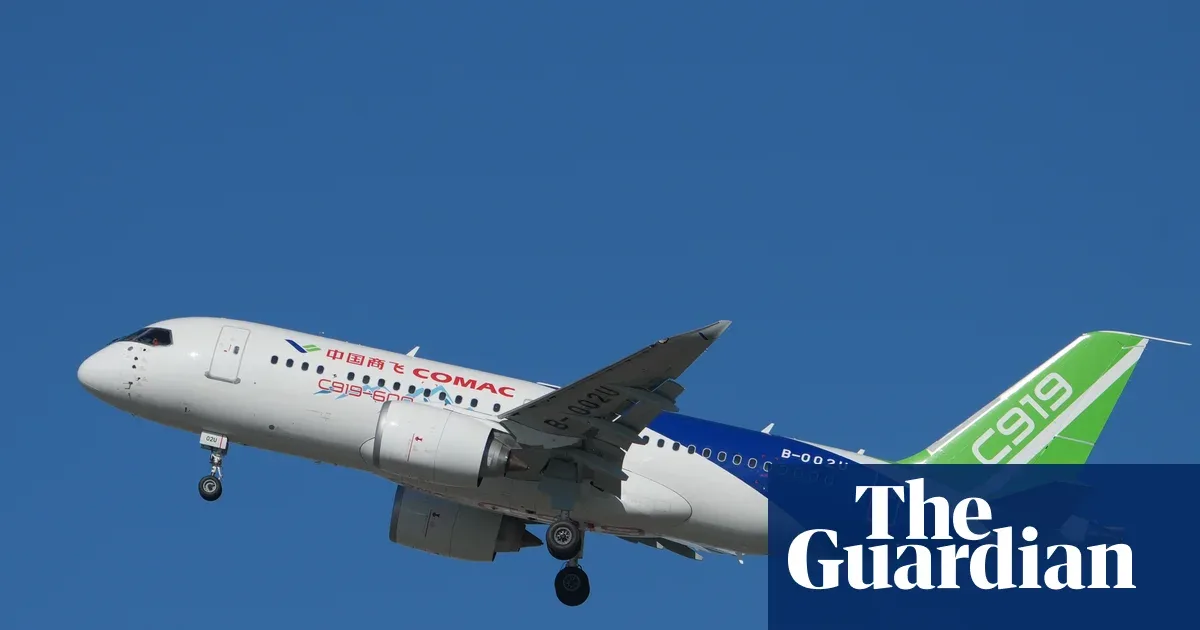
China's Commercial Aircraft Corporation of China (COMAC) C919 narrow-body passenger jet, symbolizing the nation's rise in the aviation industry, successfully completed its first scheduled international commercial flight on Wednesday, August 12. Operated by Air China, the aircraft departed from Beijing Capital International Airport heading to Ulaanbaatar, the capital of Mongolia. This flight is considered a critical turning point in China's ambition to challenge the traditional dominance of Airbus and Boeing in the global commercial aviation market.
The C919 development program was launched in 2008, with the aircraft unveiling its first prototype in November 2015 and successfully completing its maiden flight in May 2017. After receiving its type certificate from the Civil Aviation Administration of China (CAAC) in September 2022, the C919 entered commercial service with China Eastern Airlines in May 2023. Since then, the aircraft has operated on 57 domestic routes within China, carrying over 7.4 million passengers and demonstrating its operational reliability. Air China received its first C919 aircraft in August 2024.
This international debut could potentially alter long-term competitive dynamics within the aviation sector. The C919 is positioned in a segment similar in size to the Boeing 737 and Airbus A320 series aircraft, aiming to break the duopoly in the narrow-body jet market. Currently, Boeing (BA) shares are trading around $233.34, while Airbus (AIR.PA) shares are approximately €214.60. Although this single event may not directly impact the immediate stock prices of these giants, China's domestic production push holds the potential to exert pressure on future market share distribution, especially in the Asian market.
The C919's progress on the international stage is integral to China's goals of technological independence and high-value manufacturing. However, the aircraft remains dependent on Western suppliers for critical components, such as its CFM International LEAP engines and Honeywell flight control systems. This highlights the supply chain challenges China faces in achieving full independence. Furthermore, for the C919 to gain global acceptance, it requires certification from major regulators like the European Union Aviation Safety Agency (EASA) or the U.S. Federal Aviation Administration (FAA). EASA's certification process is estimated to take until 2028-2031, and COMAC is reportedly not currently pursuing FAA certification.
Market analysts and industry experts largely agree that it could take generations for the C919 to meaningfully challenge the global dominance of Boeing and Airbus. While COMAC aims to reach an annual production capacity of 150 to 200 aircraft by 2029, it delivered only 13 C919s in 2024 and approximately 16 in 2025, falling significantly short of its targets. Some experts also suggest that the C919 might have higher fuel consumption per seat compared to the Boeing 737 MAX or Airbus A320neo, which could necessitate substantial price discounts to remain competitive. These factors represent significant hurdles that COMAC must overcome to become a true global player. In the coming period, increasing production capacity and accelerating international certification processes will be key to the C919's future success.
Related Symbols
💸 Ready to act on this news?
You need a brokerage account to invest. Compare 30+ trusted brokers in seconds — zero commission options available.
Comments (0)
No comments yet. Be the first to comment!