

China's Bond Market Defies Global Yield Surge, Enhancing Diversification Appeal
Chinese government bond yields remain low amidst a global surge in bond markets. This divergence stems from China's unique economic conditions, including deflationary pressures and weak domestic demand, making its bonds an attractive diversification opportunity for investors.
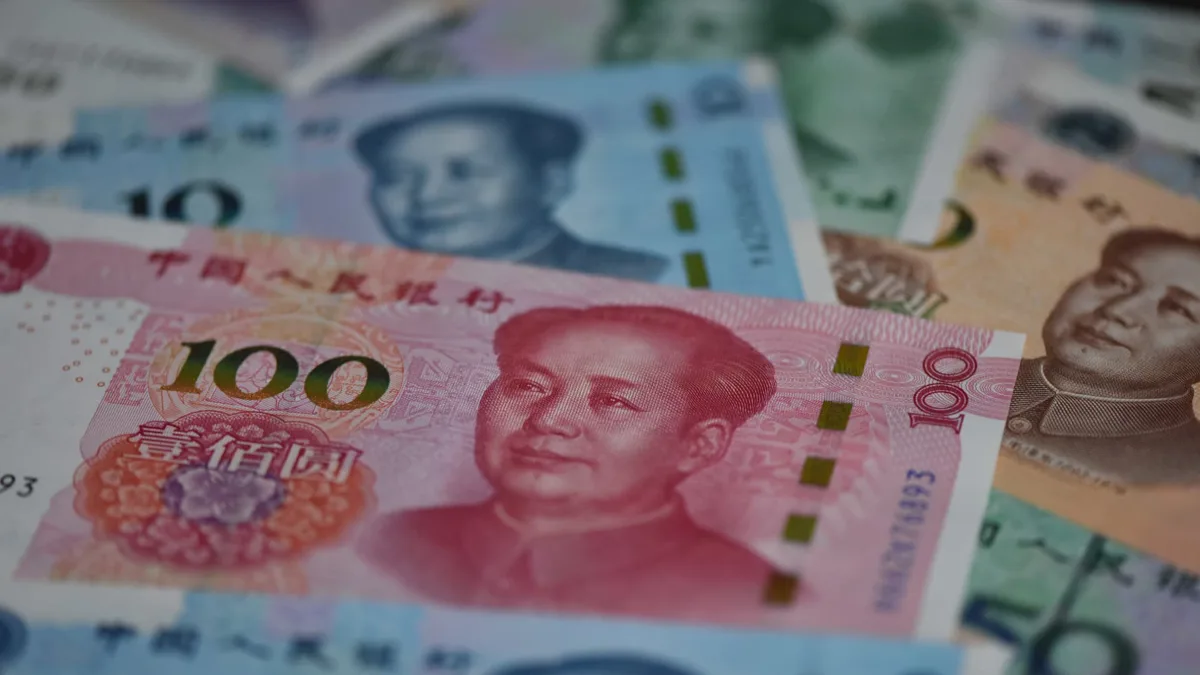
Chinese government bond yields are maintaining their low trajectory, and even falling in some maturities, in stark contrast to the notable upward trend observed in global bond markets. This phenomenon is increasingly positioning Chinese bonds as an attractive option for portfolio diversification among international investors. While bond yields in the U.S., Japan, and Europe have been rising, China's distinct domestic economic dynamics are underpinning this divergence.
Recent data indicates that China's 10-year government bond yield recently fell to as low as 1.67%, marking its lowest level since July 2025. In the same period, U.S. 10-year Treasury yields hovered around 4.72-4.74%, widening the yield gap between the two nations to over 300 basis points. This significant differential is a direct reflection of the People's Bank of China's (PBOC) accommodative monetary policies, implemented to counter domestic challenges such as a severe property sector slump, weak domestic demand, and persistent deflationary pressures. The PBOC continues to inject liquidity into the market and utilize various tools to manage interest rates in an effort to stimulate the economy.
Weak economic data, including industrial production, retail sales, and fixed-asset investment, have further amplified expectations for more stimulus from Beijing. This situation supports Chinese bond prices, leading to lower yields. Compared to their global counterparts, Chinese bonds have notably outperformed, particularly in local currency terms. These bonds offer robust diversification benefits to investors due to their low, or even near-zero, correlation with Western markets. They are particularly appealing as a low-volatility counterbalance for investors with a capital preservation mandate.
The deflationary environment in China stands in sharp contrast to the inflationary pressures seen in the U.S. and Japan. While the country grapples with structural issues like a property sector downturn and subdued domestic demand, the PBOC's dovish stance deviates from the tightening policies of other major central banks. Despite China's bond market being the world's second-largest, foreign investor participation remains relatively low. However, the inclusion of Chinese bonds in global indices and the gradual opening of its financial markets suggest a potential for increased foreign inflows in the future.
Analysts and market expectations suggest that the PBOC will continue its accommodative monetary policies to support the economy. Further fiscal or monetary support measures are anticipated, especially around key events like the National People's Congress. Experts forecast that interest rates in China are likely to remain generally low. The attractive risk-return profile, favorable valuations, and diversification benefits offered by Chinese bonds are expected to persist, making them a significant component for global portfolios.
💸 Ready to act on this news?
You need a brokerage account to invest. Compare 30+ trusted brokers in seconds — zero commission options available.
Comments (0)
No comments yet. Be the first to comment!