

Bitcoin Retreats from $64,000 Level, MicroStrategy Sale Largely Absorbed
Bitcoin briefly surged to $64,400 before pulling back, yet remained up about 6% for the week. A missile strike on a Qatari gas ship in the Strait of Hormuz lifted oil prices, while Asian tech stocks continued their sell-off.
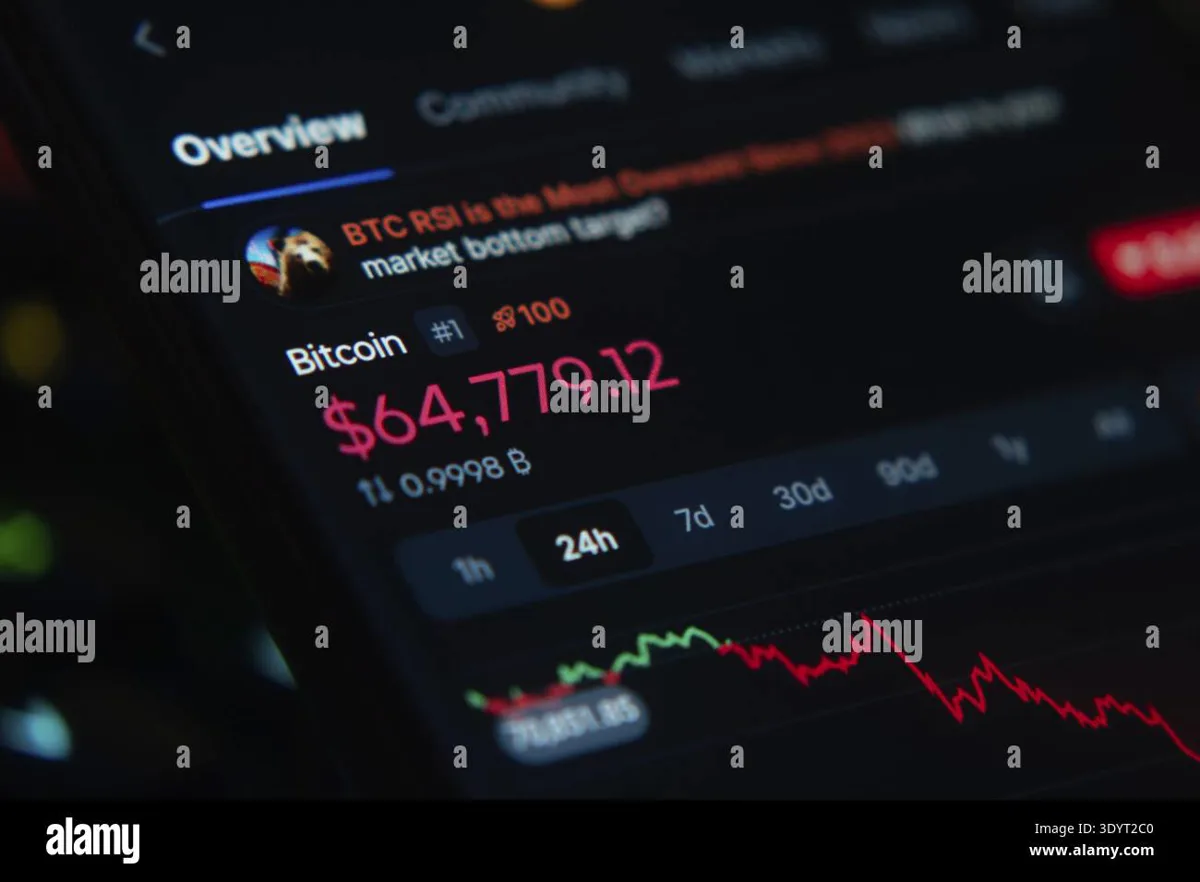
Bitcoin, the leading cryptocurrency, experienced a slight retreat after a robust rally pushed it above the $64,000 mark, touching $64,400. Despite this pullback, Bitcoin maintained approximately a 6% gain over the week. The market largely absorbed the sale of roughly $216 million worth of Bitcoin by Strategy (formerly MicroStrategy), the largest corporate holder of the cryptocurrency, with limited impact on its price. Concurrently, a missile strike on a Qatari gas ship in the Strait of Hormuz escalated geopolitical tensions, driving crude oil prices higher, while Asian technology stocks continued to face selling pressure in their respective markets.
Bitcoin's recent ascent was primarily fueled by comments from Federal Reserve (Fed) Chair Kevin Warsh at the European Central Bank (ECB) forum, where he indicated that inflation risks had receded. These remarks softened expectations regarding the Fed's monetary policy, thereby boosting appetite for riskier assets. Furthermore, weaker-than-expected U.S. jobs data for June, which showed only 57,000 new jobs, reduced the likelihood of a September Fed rate hike, further contributing to Bitcoin's rally. After concluding June as its worst month in four years, Bitcoin began July with a recovery, marked by $221 million in fresh inflows into spot Bitcoin exchange-traded funds (ETFs) on July 2, ending a 10-day outflow streak. Strategy, on its part, executed two tranches of Bitcoin sales totaling 3,588 BTC between June 29 and July 5. These sales were undertaken to fund dividend payments on its digital credit securities and to bolster its cash reserves. Despite these transactions, the company still holds a substantial 843,775 Bitcoins.
In the cryptocurrency market, Bitcoin's approach to $64,000 and subsequent minor dip triggered notable movements in derivative markets. CME futures open interest, a gauge of institutional engagement, fell to a 32-month low, suggesting waning institutional participation. Moreover, the six-month options skew, which measures the cost of protecting against a downside move, surged to near record highs, indicating increased demand for downside protection in the market. This development has been interpreted by some analysts as a sign that the market may be nearing a cycle bottom. Meanwhile, the attack in the Strait of Hormuz had a significant impact on global oil markets. Reports of a Qatari liquefied natural gas (LNG) tanker being struck by a projectile off the Omani coast led to a rise in Brent crude oil prices, which climbed approximately 0.6% to around $72.45 per barrel. This incident reignited geopolitical risks in the region and tested the peace deal reached in late June.
These financial developments, when viewed within the broader economic and political context, convey important signals. While the Fed's softer stance on inflation has somewhat increased global risk appetite, ongoing tensions between the U.S. and Iran continue to inject uncertainty into energy markets. The Strait of Hormuz is a vital chokepoint through which approximately one-fifth of the world's seaborne oil passes, meaning any instability in the region directly impacts energy prices. The sell-off in Asian technology stocks, on the other hand, stems from investors re-evaluating the elevated valuations in the artificial intelligence (AI) sector and rotating their capital into other sectors perceived as more attractive. South Korea's Kospi index, in particular, experienced significant losses due to declines in shares of chipmakers like Samsung Electronics.
Analysts and market expectations suggest that the Fed's monetary policy and ETF flows will be crucial in determining Bitcoin's trajectory in the coming period. QCP analysts note that July has historically been a strong month for Bitcoin, with average gains of about 7.5%. However, some market participants remain cautious, comparing the current recovery to brief rallies seen in 2022, suggesting that a broader decline could resume. In the oil market, prices are expected to remain under upward pressure if tensions in the Strait of Hormuz persist. For the Asian technology sector, corrections in valuations and inter-sectoral rotation are anticipated to continue for some time, potentially leading investors to adopt more balanced portfolio strategies.
Related Symbols
₿ Want to ride this crypto move?
Open an account in minutes. Compare brokers offering crypto and start investing today — zero commission options available.
Comments (0)
No comments yet. Be the first to comment!