

AI to Help Planes Avoid Climate-Warming Contrails in UK Trial
The UK government has launched "Operation Blue Skies," a £5 million trial backed by Google's AI, to reduce climate-warming condensation trails (contrails) from aircraft. This initiative aims to minimize the aviation sector's impact on global warming.
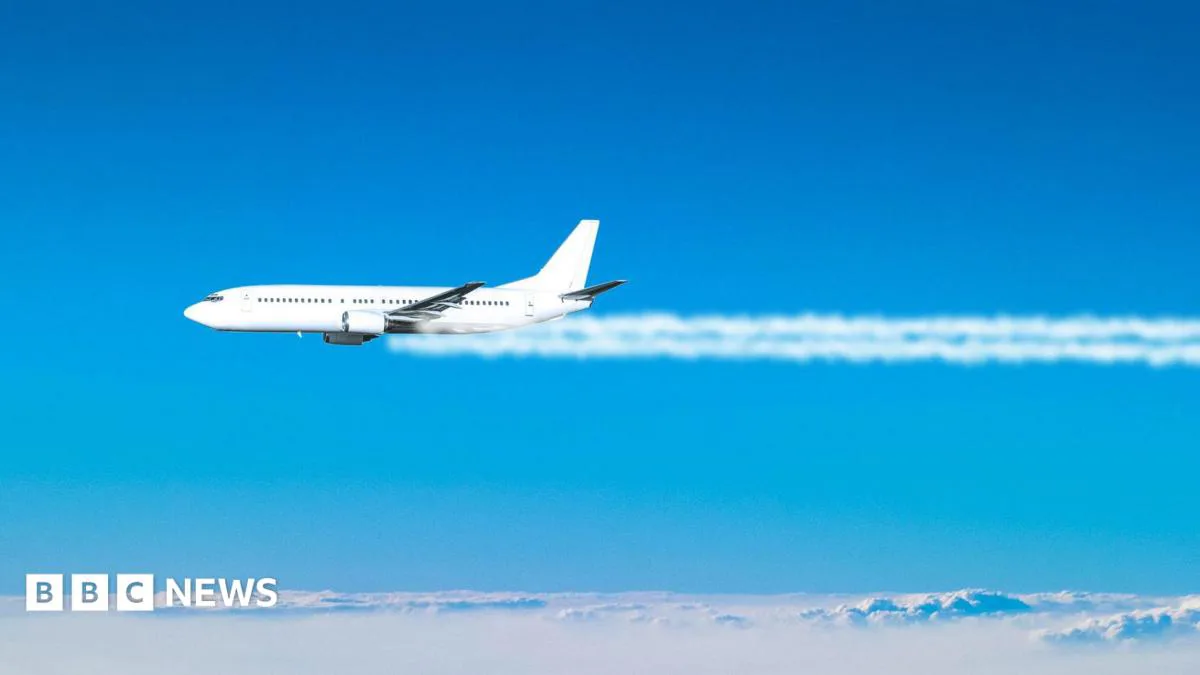
The United Kingdom has embarked on an ambitious project with the potential to significantly reduce the aviation sector's climate impact. The government announced the launch of "Operation Blue Skies," a £5 million trial program leveraging Google's artificial intelligence to prevent climate-warming condensation trails (contrails) formed by aircraft. This pioneering initiative aims to provide a cost-effective solution to mitigate aviation's contribution to global warming.
The 30-month program, supported by £2.65 million in funding from the Department for Transport (DfT) and an in-kind contribution of £1.4 million from Google, will focus on the Shanwick Oceanic airspace in the North Atlantic. This area accounts for approximately 5% of global contrail warming. The project will combine Met Office weather forecasts with Google's AI to suggest minor adjustments to flight paths, enabling aircraft to avoid atmospheric conditions where contrails are most likely to form. A previous trial by Google and American Airlines demonstrated a 54% reduction in contrail formation during test flights.
Contrails are estimated by the Intergovernmental Panel on Climate Change (IPCC) to be responsible for approximately 35% of the aviation sector's global warming impact. Projects like "Operation Blue Skies" offer a solution that is 10 to 100 times more cost-effective in reducing CO2 equivalent (CO2e) warming per tonne compared to sustainable aviation fuels (SAF) or carbon removal strategies. Calculations suggest that rerouting to avoid contrails would incur an additional fuel cost of only 0.1% to 0.5% of the current fleet-wide fuel consumption for airlines, amounting to an annual cost of around $732 million, which is less than 0.1% of airlines' total expenses.
This trial is part of the broader UK government strategy to decarbonize aviation. The government has previously committed £219 million to boost low-carbon fuel production and £43 million for clean aviation technologies such as electric and hydrogen-powered aircraft. These investments are expected to contribute £5 billion to the UK economy and support 15,000 jobs by 2050. Consulting firms like KPMG are also encouraging airlines to invest in contrail reduction technologies, evaluating the business case for implementation costs and operational modifications.
Analysts and market experts indicate that AI-powered contrail avoidance technology holds significant potential to transform the aviation industry. Professor Steven Barrett, Regius Professor of Engineering at the University of Cambridge, noted that contrail avoidance could drastically reduce aviation's global climate impact at "minimal cost to passengers and companies." Such solutions are anticipated to be a critical strategy for airlines to achieve net-zero carbon goals and deliver a cost-effective impact in the near term. Policymakers are also expected to increase incentives in this area and foster international collaboration.
💸 Ready to act on this news?
You need a brokerage account to invest. Compare 30+ trusted brokers in seconds — zero commission options available.
Comments (0)
No comments yet. Be the first to comment!